Updated September 12, 2026 · 10 min read
By Boise Bath — bathroom & shower remodeling in Boise & the Treasure Valley
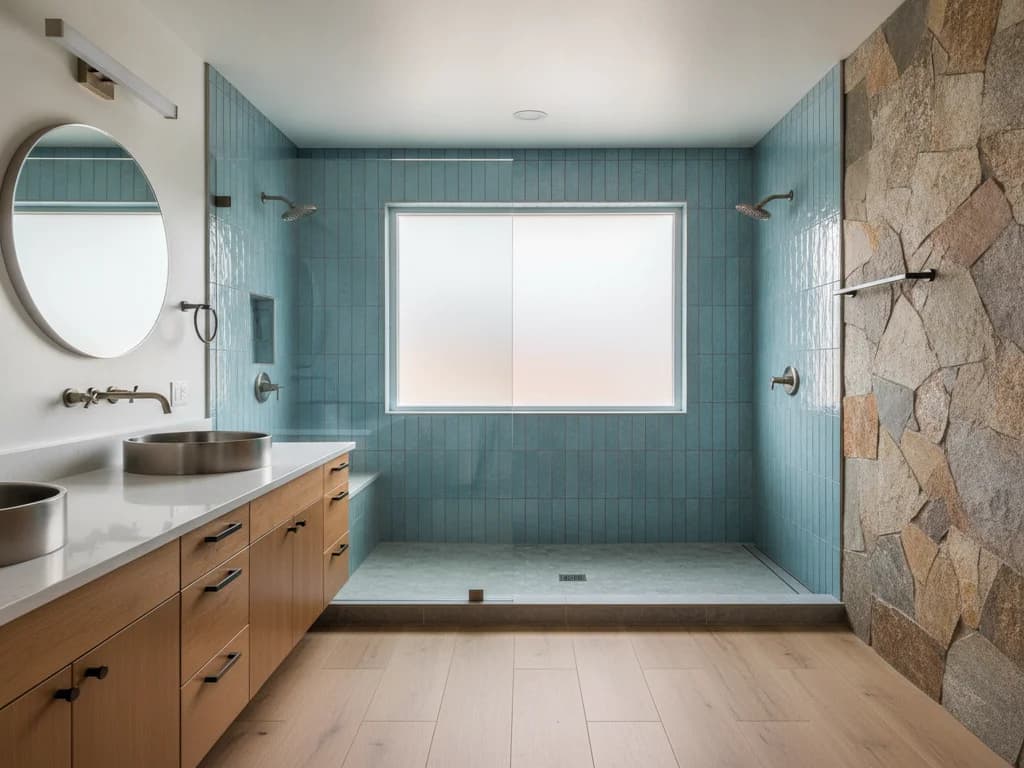
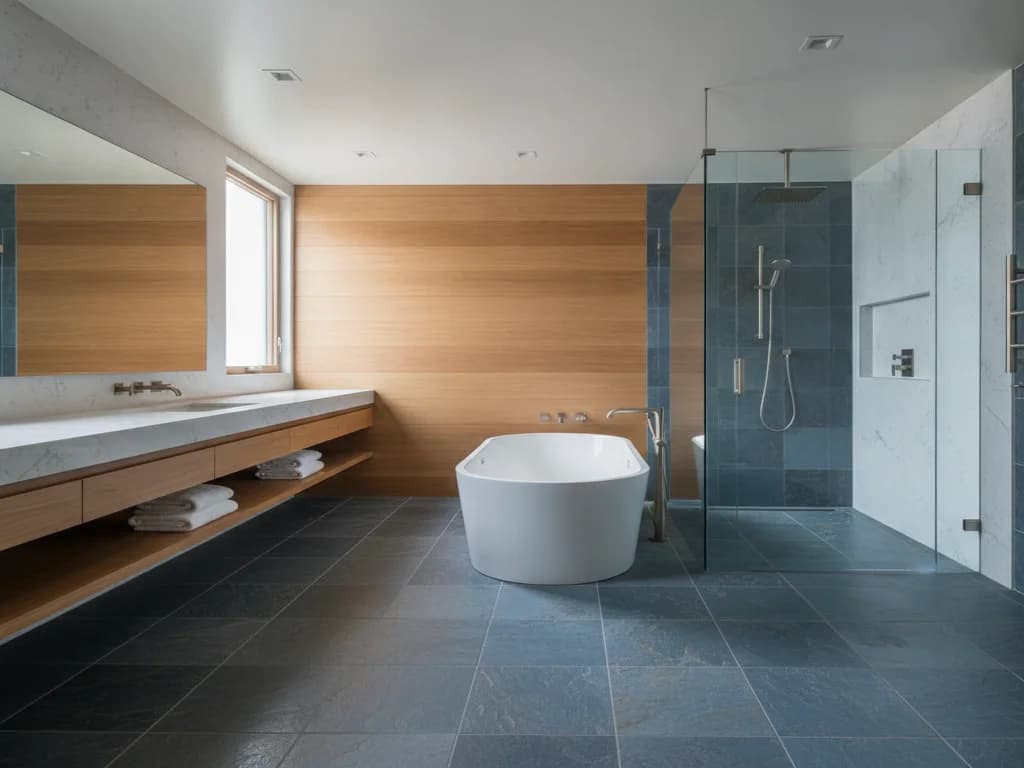
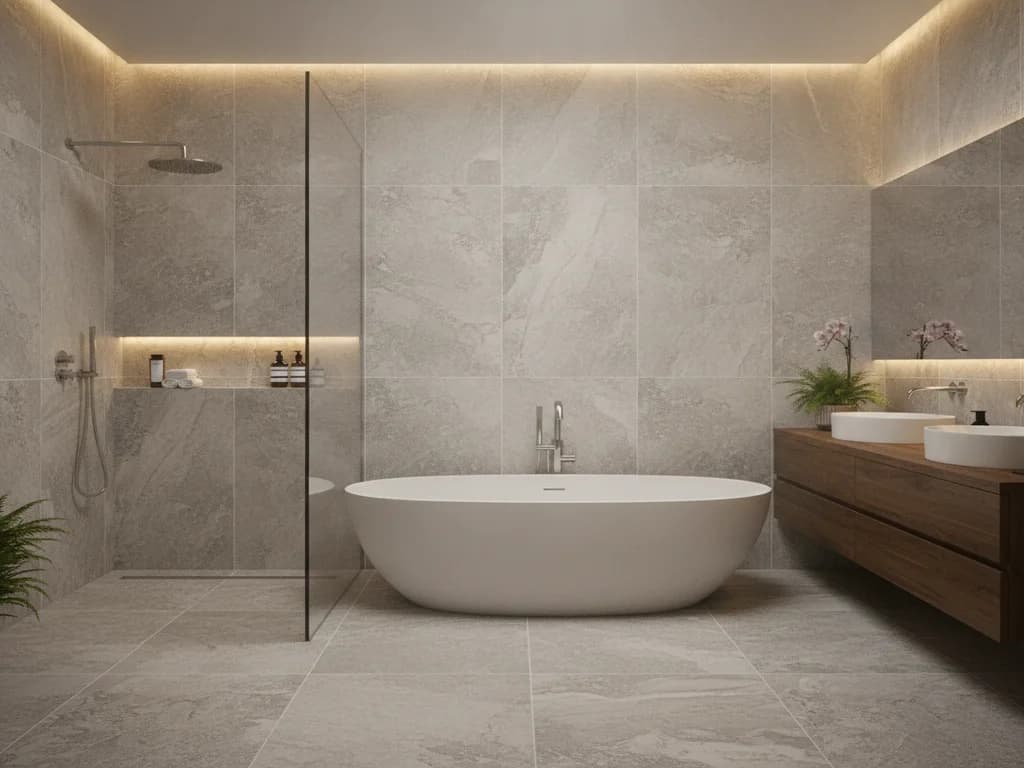
A wet room conversion waterproofs the entire bathroom floor — and often the lower walls — rather than just the shower stall, so the whole room can get wet without a curb, pan, or enclosure holding water back. It reads as open and minimal, but that openness is the reason the build is different from a standard shower: the membrane, the slope, and the drain all have to work together across a much larger area than a typical shower pan covers.
Boise Bath does not publish a standalone wet room rate — it is a full-room waterproofing scope rather than a single fixture, and the honest way to frame it is against the cited national data for what that scope typically runs. This guide uses Fixr’s published wet room figures, plus qualitative detail from Today’s Homeowner and Bob Vila, to show what a wet room typically costs and why the range is as wide as it is.
Key takeaways
- Boise Bath doesn't publish a standalone wet room rate — it's a full-room waterproofing scope that sits near our Walk-In/Custom Tile Shower ($12,000–$22,000) and Guest Bathroom Remodel ($15,000–$28,000) categories.
- Fixr prices a wet room at $14,000–$22,000 installed.
- Fixr’s wet room vs. traditional bathroom comparison puts a 144-square-foot wet room at about $21,600, roughly 20% more than a traditional bathroom the same size.
- A wet room waterproofs the entire floor and often the walls — Today's Homeowner (2025) notes even ceilings can need waterproofing — which is why cost scales with room square footage, not just shower footprint.
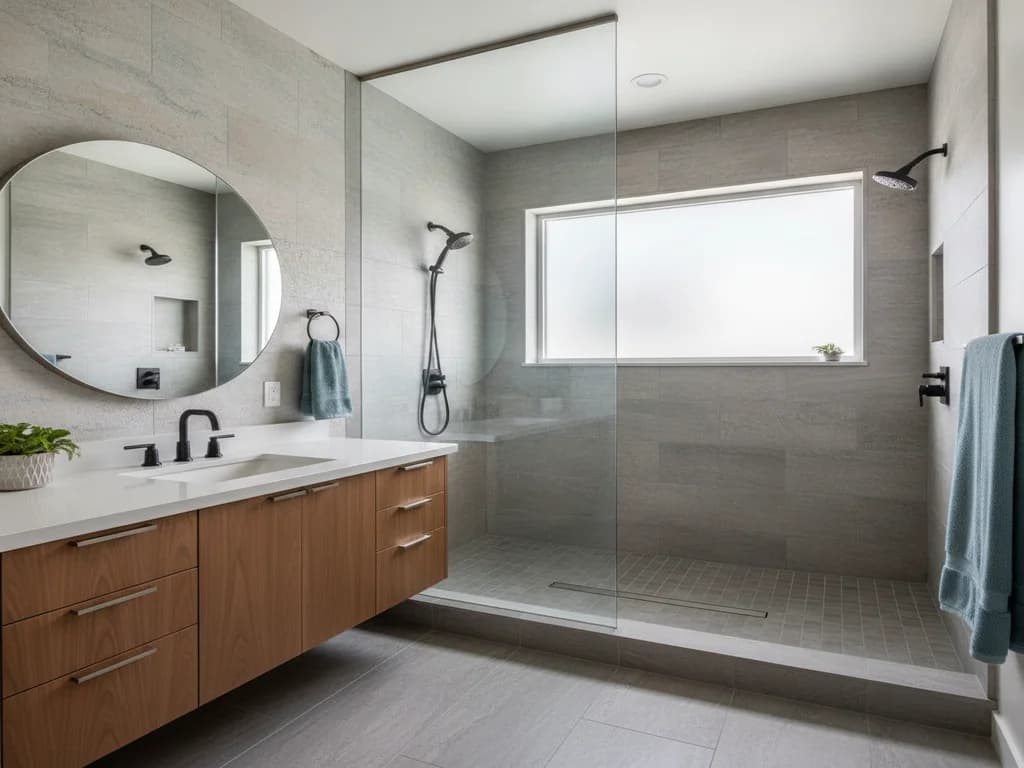
- A glass partition can confine water to part of the room, keeping a vanity or toilet area dry, at added cost over a fully open layout.
The short answer
Fixr prices a wet room at $14,000–$22,000 installed, as part of its disability and accessible remodeling cost data. Its separate wet room vs. traditional bathroom comparison works through a 144-square-foot example: about $21,600 for the wet room, roughly 20% more than the $18,000 it gives for a traditional bathroom the same size.
Bob Vila (2021) doesn’t publish a cost figure at all, noting only that waterproofing every surface "from top to bottom can get expensive." Taken together, the cited ranges point to a project that typically runs from the low five figures into the low twenties, not a small add-on cost.
Why full-room waterproofing changes the budget
In a standard bathroom, only the tub and shower walls need to be truly waterproof. Today's Homeowner (2025) explains that a wet room is different: "all walls, and potentially even ceilings, need to be waterproof," which means waterproof paint and wallboard rated to repel moisture extend across the entire room, not just the wet zone. That is the core reason a wet room costs more than a comparable shower remodel — the membrane work multiplies with the square footage of the room, not just the shower footprint.
Bob Vila (2021) frames the same tradeoff from the finish-material side: because every surface has to hold up to water, "material limitations due to waterproofing requirements" narrow the flooring and wall-finish choices compared with a dry-zone bathroom, and the extensive tiling this requires is itself a meaningful share of the cost.
Drainage slope and the step-down question
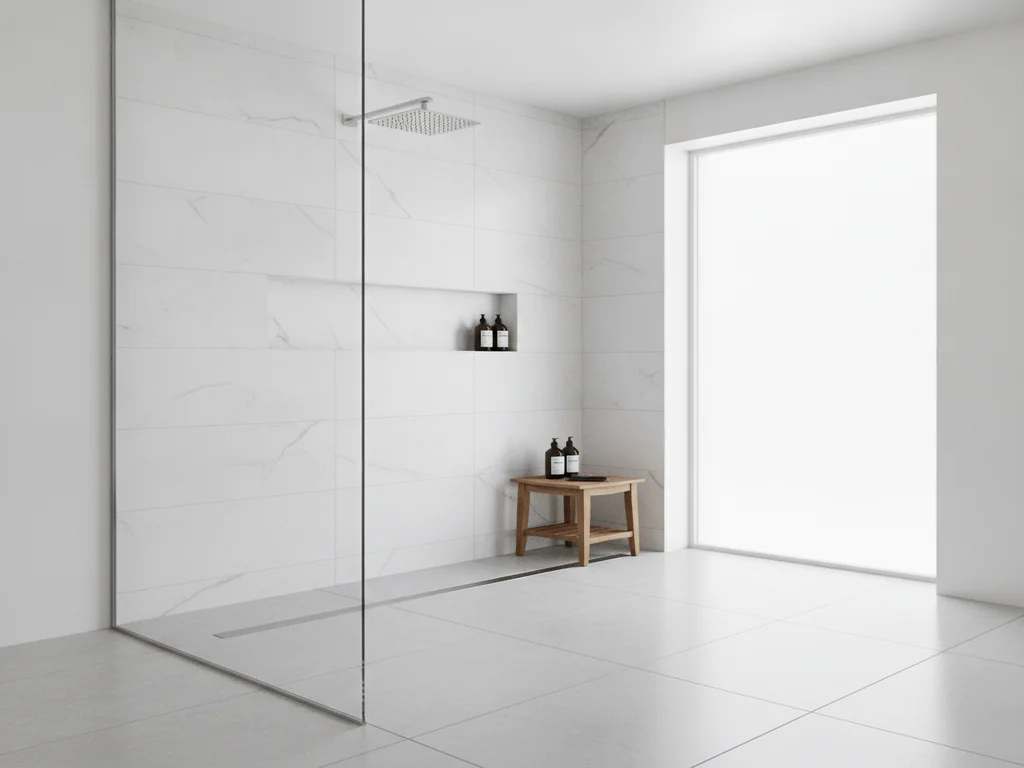
Because there is no shower pan or curb to contain water, the entire wet room floor has to carry water to a drain by slope alone. Today's Homeowner (2025) describes this directly: "the floor will be gently sloped in the direction of the drain," and many wet room designs still use "a step — between the wet bathroom and the rest of the house to keep water inside," rather than going fully flush with an adjoining dry hallway or bedroom. The choice between a linear drain along one edge and a traditional center drain shapes how that slope gets built.
That drainage design is the same engineering question a curbless shower has to solve, just applied across a whole room instead of a single stall — which is part of why a wet room conversion typically costs more than a curbless shower alone.
Glass partitions: keeping some of the room dry
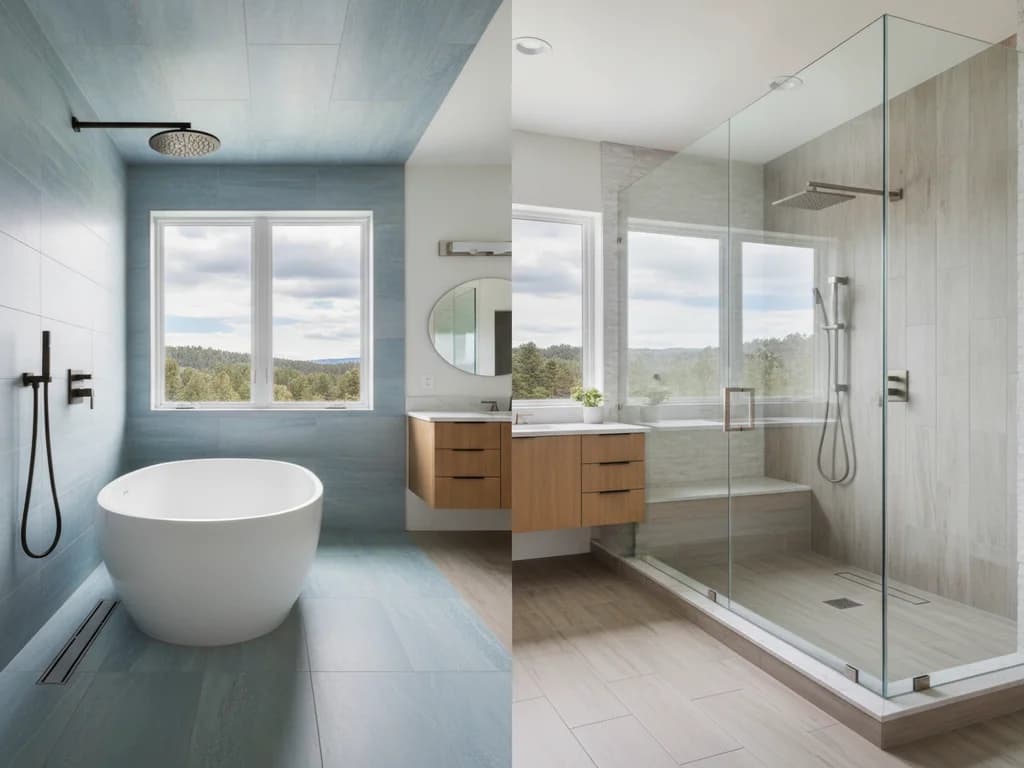
Not every wet room is fully open. Bob Vila (2021) describes designs that use "a glass wall with a glass door to divide a bathroom into a wet room side (with shower, sink, and tub) and a non-wet room side," or "a partial glass partition separating the shower from the toilet and sink." Today's Homeowner (2025) frames the same choice as confining "spray from the shower to the portions of the bathroom served by the drains."
A glass partition adds cost over a fully open layout, but it keeps towels, a vanity, or a toilet area dry — which is often the deciding factor for homeowners who like the wet room look but don't want the entire room to get wet on every shower.
| Scope | Cost | Source |
|---|---|---|
| Wet room, installed | $14,000–$22,000 | Fixr, Cost to Remodel to Adapt for a Disability |
| Wet room, 144 sq ft worked example | $21,600 (about 20% above $18,000 for a traditional bathroom the same size) | Fixr, Wet Room vs. Traditional Bathroom |
National figures from Fixr. The $21,600 figure is Fixr's worked example for one room size, not an average. A Boise wet room is priced at the consultation.
Accessibility is a side benefit, not the whole story
Today's Homeowner (2025) notes that eliminating "high tub edges" is a real advantage of a wet room "as we age, stepping over a tub edge or shower tray can become a difficult and even hazardous proposition" — the same flush-entry logic behind a curbless shower. But a wet room is a design choice built around openness and a specific look, not a substitute for an accessibility-focused remodel. If barrier-free access is the primary goal rather than the aesthetic, our accessible bathroom remodel cost guide covers grab-bar blocking, clearances, and comfort-height fixtures more directly.
What Boise Bath publishes
Boise Bath doesn't publish a standalone wet room rate — it's a full-room waterproofing scope that sits between our published categories rather than inside one of them. Our Walk-In / Custom Tile Shower category, published at $12,000–$22,000, covers a comparable shower build but not full-room membrane work; our Guest Bathroom Remodel category, published at $15,000–$28,000, is closer in overall scope since it touches the whole room. Based on the cited national data above, expect a Boise wet room conversion to land in that same general band, with the exact number driven by room size, whether a glass partition is included, and how much of the existing floor structure needs to change to build in slope. For the full picture, see our Boise bathroom remodel cost guide and our wet room conversion service page.
3-year workmanship warranty
Every wet room we build is backed by a 3-year workmanship warranty on our construction, in addition to manufacturer warranties on the waterproofing membrane and drain components we use.
Cost across the Treasure Valley
A wet room conversion prices out the same way across the Treasure Valley — the budget follows room size, how much of the floor structure has to change to build in slope, and whether a glass partition is added, not which city you live in. Our per-city bathroom remodel cost pages carry the published Boise Bath remodel ranges a wet room lands near, so you can anchor to the local base cost: Meridian, Nampa, Eagle, Caldwell, Kuna, and Star.
Financing a wet room conversion
A wet room lands in the low five figures into the low twenties nationally, per the cited ranges above, which puts it squarely in the range homeowners commonly finance rather than pay out of pocket in one lump. Our guide to how bathroom remodel financing works breaks down the common structures, and our financing options page covers what Boise Bath offers.
Waterproofing and flooring: where the budget really goes
Because a wet room waterproofs the whole floor rather than a single pan, the membrane and the substrate under it drive more of the cost than the finishes on top. If you want to understand what that scope actually involves, our shower waterproofing guide explains the membrane systems a wet floor depends on, and our bathroom flooring underlayment guide covers the layer beneath the tile that has to move water to the drain without failing. And if you're still deciding whether the open, curbless look is right for your household, the honest pros and cons of a wet room lay out the tradeoffs before you commit to the waterproofing scope.
Frequently asked questions
- How much does a wet room cost in Boise?
- Boise Bath doesn't publish a standalone wet room rate — it's a full-room waterproofing scope, not a single fixture. Nationally, Fixr prices a wet room at $14,000–$22,000 installed, and works through a 144-square-foot example at about $21,600. A Boise wet room is priced at the in-home consultation.
- Why does a wet room cost more than a regular shower remodel?
- A wet room waterproofs the entire bathroom floor and, per Today's Homeowner (2025), potentially the walls and ceilings too — not just the shower stall. That membrane work scales with the size of the whole room rather than a single shower pan, which is the main reason the cost runs higher than a comparable curbless shower alone.
- Does a wet room have to be fully open, with no dry area?
- No. Bob Vila (2021) describes wet room designs that use a glass wall and door, or a partial glass partition, to keep part of the room — like a vanity or toilet area — dry while the shower zone handles the spray. Today's Homeowner (2025) frames this the same way: confining spray to the portions of the room served by the drain.
- Does a wet room cost the same in Meridian or Nampa as in Boise?
- Yes — a wet room conversion tracks room size, how much floor structure has to change for slope, and whether a glass partition is added, not which Treasure Valley city you live in. Our per-city cost pages for Meridian, Nampa, Eagle, Caldwell, Kuna, and Star carry the published Boise Bath remodel ranges a wet room lands near.
- Can I finance a wet room conversion?
- A wet room typically runs from the low five figures into the low twenties nationally, per the cited ranges above, which is well within the range homeowners commonly finance. Our guide to how bathroom remodel financing works and our financing options page cover the common structures for spreading the cost over time.
- What part of a wet room drives the cost?
- The full-room waterproofing does. Because the membrane and substrate extend across the whole floor rather than a single shower pan, that layered waterproofing work — not the visible finishes — is the biggest cost driver. Our shower waterproofing and bathroom flooring underlayment guides explain what that scope involves.
Sources
- Today's Homeowner — What Is the Wet Area in a Bathroom? (updated 2025)
- Fixr — Cost to Remodel to Adapt for a Disability (2025)
- Fixr — Wet Room vs. Traditional Bathroom
- Bob Vila — The Pros and Cons of Wet Room Bathrooms (2021)
- TCNA — Handbook for Ceramic, Glass & Stone Tile Installation
- U.S. Access Board — ADA Ch. 6: Bathing Rooms
Claims and figures are drawn from the sources above and provided for general guidance; your project may vary. Photography is illustrative of design concepts. For a fixed price on your specific bathroom, request a free estimate.