Updated August 28, 2026 · 7 min read
By Boise Bath — bathroom & shower remodeling in Boise & the Treasure Valley
The short answer
The bathrooms that freeze in Idaho are almost always the ones with supply lines running inside an exterior wall, or plumbing serving an unheated or rarely used space. During a hard cold snap, open the vanity cabinet doors to let warm room air reach the pipes, keep the room heated, and never leave an at-risk bathroom closed off.
Key takeaways
- Freezing is rarely a general risk — it concentrates in specific, identifiable conditions.
- Supply lines routed inside an exterior wall are the single most common cause of a frozen bathroom pipe.
- Bathrooms over unheated crawl spaces or garages, and those in additions, carry elevated risk.
- A closed vanity cabinet on an exterior wall is effectively an unheated box around the plumbing.
- Opening cabinet doors during a cold snap lets warm room air reach supply lines — simple and genuinely effective.
- Guest bathrooms and rarely used bathrooms are over-represented in freeze failures because nobody notices the room is cold.
- Damage usually happens on thaw, when the ice plug melts and water escapes through the split.
- A remodel is the right moment to move plumbing out of an exterior wall permanently — it is cheap while walls are open and expensive later.
Who actually needs to worry
Most bathrooms in the Treasure Valley never have a freeze problem, and homeowners in a well-insulated house with interior plumbing can reasonably skip this entirely.
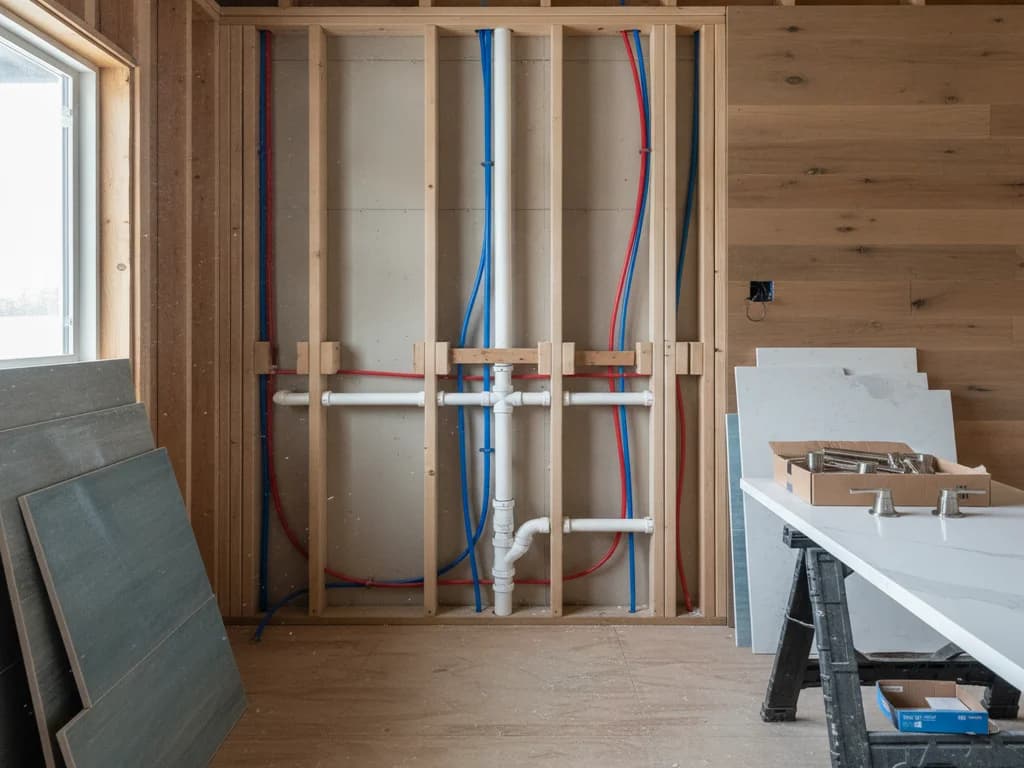
Freeze failures concentrate in a small set of identifiable conditions. The dominant one is supply lines routed inside an exterior wall — a common construction shortcut, particularly in older houses and in additions where getting plumbing to a fixture was easier through the outside wall than around.
Plumbing in that position sits between the interior finish and the outside air, often with insulation on the wrong side of it. When outdoor temperatures drop hard enough for long enough, the pipe reaches freezing while the room a few inches away stays comfortable.
Other elevated-risk cases follow the same logic: bathrooms cantilevered over unheated space, bathrooms above a garage, plumbing running through a vented crawl space, and additions where the insulation detail at the connection to the original house was imperfect.
The vanity cabinet problem
There is a specific and very common version of this worth calling out, because the fix costs nothing.
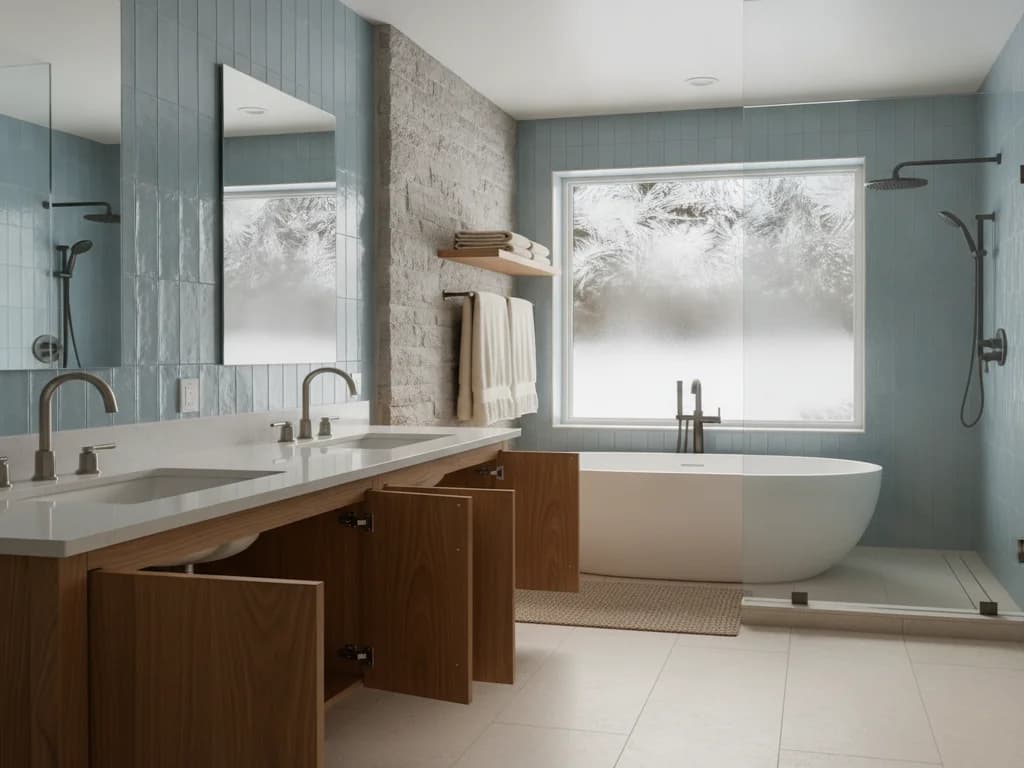
A vanity on an exterior wall, with its doors closed, is an insulated box sitting between the room’s heat and the plumbing. The cabinet blocks warm air from reaching the supply lines and trap, so the space behind those doors runs meaningfully colder than the room.
During a cold snap, opening the vanity doors lets room air circulate around the plumbing. It is the single most effective no-cost action available, and it is why the advice appears every winter — it works.
The same principle applies to any enclosed space containing plumbing on an exterior wall. If air cannot get to it, warmth cannot either.
During a hard cold snap
Open vanity and sink cabinet doors on exterior walls. Keep the bathroom door open so the room stays in the heated envelope. Do not turn heat off in an unused bathroom. If the house will be empty, do not set the thermostat lower than the low fifties.
The bathroom nobody uses
Guest bathrooms, basement bathrooms, and bathrooms in a closed-off wing are over-represented in freeze failures, and the reason is behavioral rather than technical.
A room that nobody enters is a room where nobody notices it is cold. Doors get closed to save heat, registers get shut, and the space drifts well below the rest of the house. Add plumbing in an exterior wall and the conditions are set.
The other half of the problem is detection. A pipe that splits in a bathroom used daily is discovered within hours. One that splits in a guest bathroom over a long weekend can run for a considerable time before anyone opens the door, and the difference between those two scenarios is the difference between a repair and a renovation.
If a bathroom is genuinely unused through winter, the more thorough option is to shut off its supply and drain the fixtures rather than relying on heat reaching a room nobody visits.
What actually causes the damage
A useful thing to understand: the burst usually does not happen while the pipe is frozen.
When water freezes it expands, and in a closed pipe that expansion pressurizes the water between the ice plug and a closed fixture. That pressure is what splits the pipe, and the split can be small — sometimes a hairline that stays sealed by the ice itself.
The water escapes on thaw. That is why a homeowner can find a frozen pipe, restore heat, feel relieved when flow returns, and then discover water coming through a ceiling an hour later.
The practical implication is that discovering a frozen pipe is the moment to shut off the water supply and thaw slowly with the shutoff closed, rather than restoring flow and hoping. Where a split is suspected, that is a call to a plumber before water is restored, not after.
The permanent fix belongs in a remodel
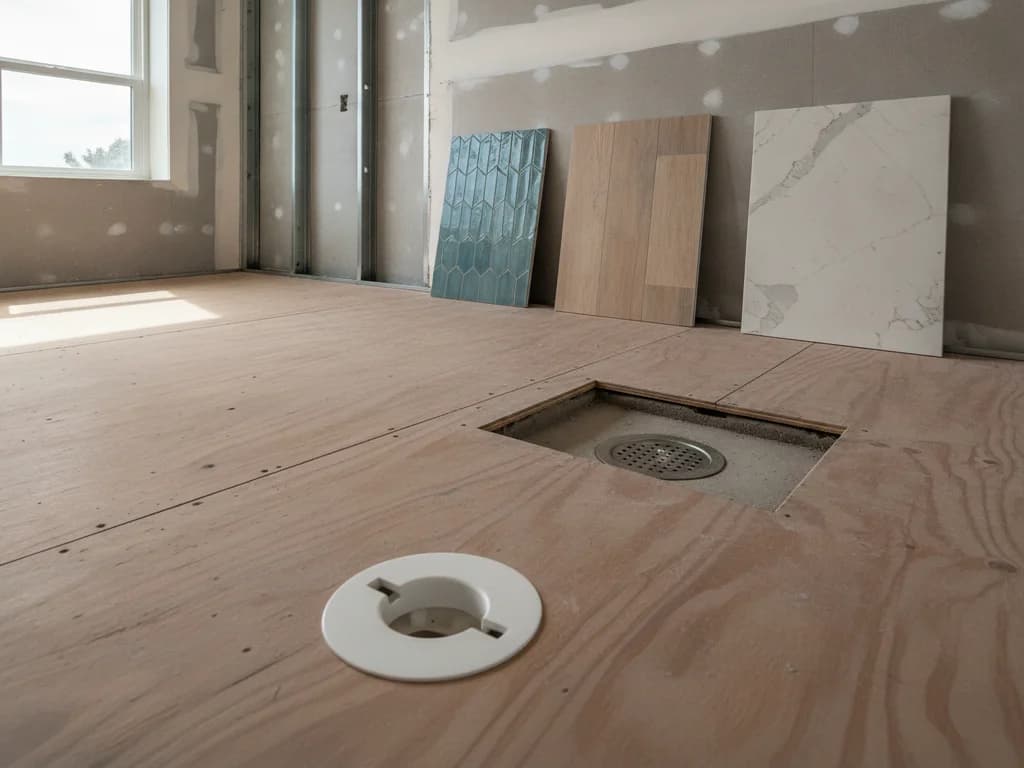
Annual freeze-management is a workaround. The actual solution is to not have supply lines in an exterior wall — and the only economical time to change that is when the walls are already open.
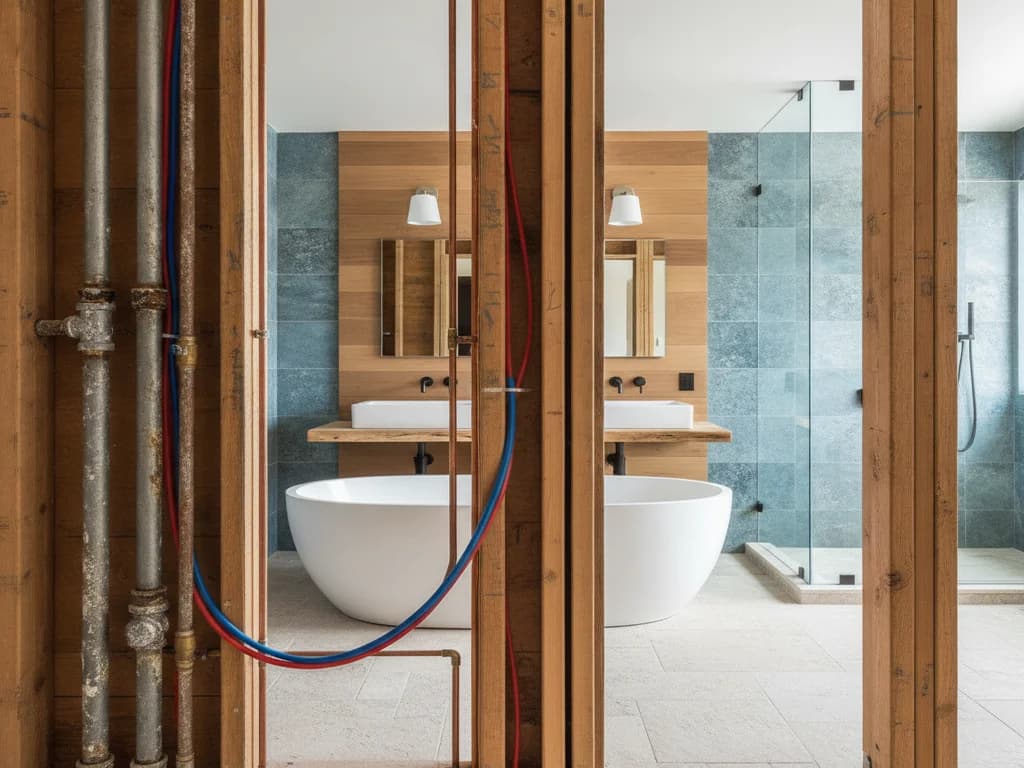
During a bathroom remodel, rerouting supply lines to an interior wall is usually a modest addition to work already happening. Where rerouting is genuinely impractical, the plumbing can at least be brought to the warm side of the insulation rather than left between the insulation and the exterior sheathing, which is where it commonly sits in older construction.
This is worth raising explicitly during planning, because it is invisible in the finished room and easy to leave undone. A bathroom that has frozen once will freeze again under the same conditions, and a remodel is the one opportunity to end that permanently rather than manage it every January.
What the process looks like
- 1
Find out where your supply lines run
Plumbing inside an exterior wall is the dominant risk. Bathrooms over garages, crawl spaces, or in additions carry elevated risk for the same reason.
- 2
Open the cabinets during a cold snap
A closed vanity on an exterior wall is an insulated box around the plumbing. Opening the doors lets room air reach it, and costs nothing.
- 3
Keep every bathroom inside the heated envelope
Do not close off or unheat a guest bathroom. Unused rooms are where freezes happen and where a leak runs longest before anyone notices.
- 4
If a pipe freezes, shut the water off before thawing
The split usually leaks on thaw, not while frozen. Close the supply, thaw slowly, and get a plumber before restoring water if a split is suspected.
- 5
Move the plumbing during the remodel
Rerouting supply lines to an interior wall is a modest addition while walls are open, and it ends the problem permanently instead of managing it every January.
Ready to plan your Boise bathroom?
Licensed & insured · 3-year workmanship warranty
Frequently asked questions
- Why do bathroom pipes freeze in some houses and not others?
- Almost always because of where the plumbing runs. Supply lines routed inside an exterior wall sit between the interior finish and outside air, often with insulation on the wrong side, so they can reach freezing while the room stays comfortable. Interior-wall plumbing in a heated house rarely has a problem.
- Does opening vanity cabinet doors actually help?
- Yes, and it is the most effective no-cost measure available. A closed vanity on an exterior wall is an insulated box between the room’s heat and the plumbing, so the space behind the doors runs colder than the room. Opening them lets warm air circulate around the supply lines and trap.
- When does a frozen pipe actually burst?
- The split usually occurs while frozen — expanding ice pressurizes water between the plug and a closed fixture — but the water escapes on thaw, sometimes an hour after flow appears to return. That is why a frozen pipe should be thawed with the supply shut off, and why a suspected split needs a plumber before water is restored.
- What should I do with a bathroom I do not use in winter?
- Do not simply close it off — an unused room where nobody notices the cold is exactly where freezes happen, and where a leak runs undetected longest. Keep it within the heated envelope with the door open, or if it is genuinely unused, shut off its supply and drain the fixtures.
- Can a remodel fix a pipe that freezes every winter?
- Yes, and it is the right time to do it. Rerouting supply lines out of an exterior wall to an interior one is usually a modest addition to work already underway, and it ends the problem permanently. Raise it during planning — it is invisible in the finished room and easily left undone.
Sources
- This Old House — Bathrooms
- Fine Homebuilding
- Journal of Light Construction
- International Code Council (IRC/IBC)
- Idaho DBS — Plumbing Program
Claims and figures are drawn from the sources above and provided for general guidance; your project may vary. Photography is illustrative of design concepts. For a fixed price on your specific bathroom, request a free estimate.