Updated July 16, 2026 · 7 min read
By Boise Bath — bathroom & shower remodeling in Boise & the Treasure Valley
The short answer
Vitreous china is the best bathroom sink material for most homes — its fired glass-like glaze resists stains, scratches, and hard-water spotting at every price point. Fireclay is the heavier-duty upgrade, solid surface wins for seamless integrated counters, and stone and glass are style picks that trade daily upkeep for the look.
Key takeaways
- Vitreous china is the default for a reason: a glass-hard fired glaze that shrugs off stains, cosmetics, and decades of scrubbing at prices from builder-grade to designer.
- Fireclay is fired hotter and denser than vitreous china — the pick for oversized, farmhouse, and statement basins where extra chip resistance earns its premium.
- Solid surface (and its integrated-top cousins) is the seamless option: sink and counter in one piece, no rim seam to scrub, and minor scratches sand out.
- Natural stone sinks are porous and live on their sealer — beautiful, and a genuine maintenance commitment rather than a durability upgrade.
- Glass vessels show every water spot, and Treasure Valley’s hard water makes that a daily squeegee habit, not an occasional wipe.
- Material and mounting style are separate decisions — any material here comes in multiple mounting formats.
The short answer: china for most, upgrades for specific reasons
Bathroom sinks are a rare category where the default answer is also the best answer for most people. Vitreous china dominates because it solves the bathroom’s actual problems — toothpaste, cosmetics, hot water, hard-water minerals, decades of cleaning — at every price point. The other materials earn their place only when they solve a problem china doesn’t.
That’s the structure of this ranking: china as the baseline, then fireclay, solid surface, stone, and glass judged on what each adds and what each costs you in upkeep. Categories and specs, not brands — a well-glazed china basin from any major fixture line outperforms a poorly made designer piece.
One scoping note: material and mounting are different decisions. Undermount, drop-in, vessel, and integrated formats each come in several of these materials, and the mounting choice changes cleaning and counter space more than the material does. That half of the decision lives in vessel vs. undermount sinks and drop-in vs. undermount.
Best all-around: vitreous china
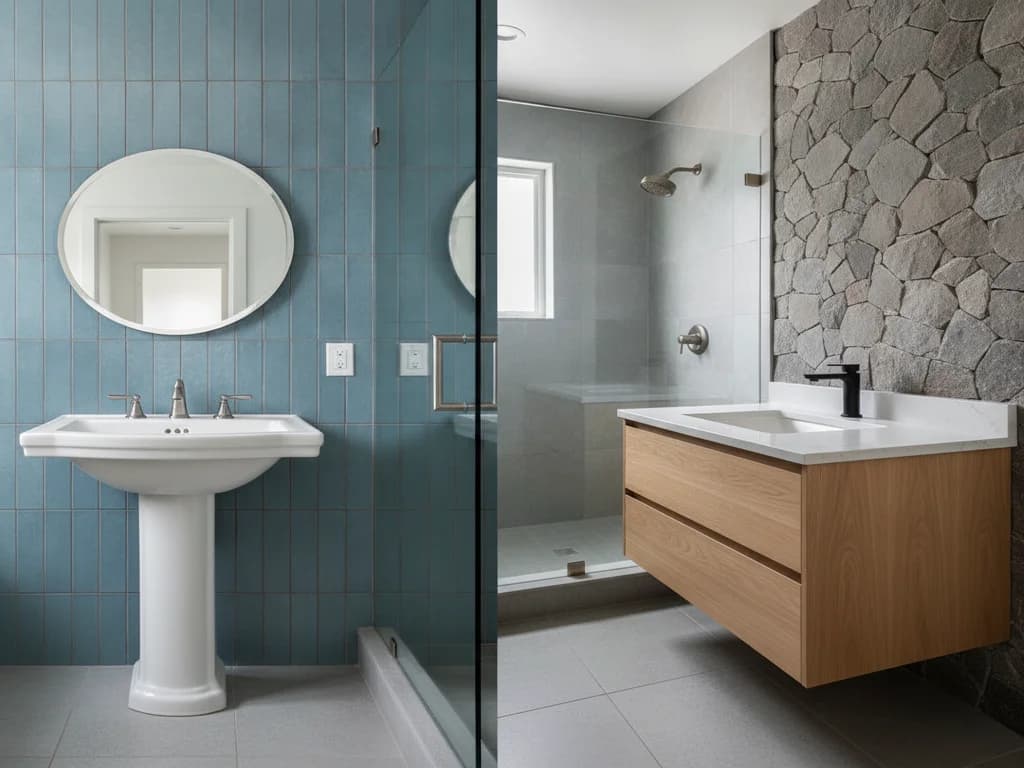
Vitreous china is ceramic fired with a glaze that vitrifies — turns glass-like — creating a surface that is non-porous, stain-resistant, and hard enough to take decades of abrasive cleaning without dulling. Major manufacturers like Kohler build the bulk of their bathroom lines from it, which is why replacement basins, matching colors, and every mounting style are always available.
For daily life it has the quietest ownership story of any material here: cosmetics and dyes wipe off the glaze, hard-water film cleans off with standard descaling, and there is nothing to seal, oil, or baby. Its one real weakness is impact — a dropped perfume bottle can chip the glaze, and a chip in china is a repair-kit cosmetic fix, not an invisible one.
Price is the closer. China spans everything from builder-grade to sculptural designer basins, so choosing it never means settling. When a sink swap is the whole project, the scope and cost picture is covered in replacing a bathroom sink.
Best heavy-duty upgrade: fireclay
Fireclay is china’s denser sibling — a specific clay body fired at higher temperatures until clay and glaze fuse into an exceptionally hard, chip-resistant surface. It came up through farmhouse kitchen sinks, where it survives cast-iron pans, and migrated to bathrooms in oversized basins, trough sinks, and statement pieces.
In a bathroom, honesty requires saying the upgrade is partly insurance you may never claim: nobody drops skillets in a powder room. Where fireclay genuinely earns its premium is scale and heft — large-format basins that would be fragile in thinner materials — and in households that are simply hard on fixtures.
Two practical notes: fireclay pieces are heavy, so oversized basins may need vanity structure checked, and small dimensional irregularities from high-temperature firing are normal in the category — undermount installs want a fabricator who has templated fireclay before.
Best for seamless counters: solid surface and integrated tops
Solid surface (acrylic resin materials of the Corian family) can be fabricated with the sink and countertop as one continuous piece — no rim, no seam, no caulk line to blacken. For cleaning, that’s the best geometry a bathroom sink can have: one wipe from backsplash to drain with nothing to catch grime.
The material is also uniquely repairable. Solid surface is the same material all the way through, so minor scratches and scorches sand out — a fix no glazed or stone product offers. The trade-off is hardness: it scratches and dulls more easily than china or quartz in the first place, and it doesn’t love very hot styling tools set directly on it.
The adjacent option is the integrated cultured-marble or engineered top common in production homes — one molded piece with a gel-coat surface. It shares the seamless-cleaning win at a lower price, though its gel coat can wear and craze over the years; when that’s the situation you’re replacing, replacing a cultured marble vanity top covers the path out.
The style picks: natural stone and glass, told straight
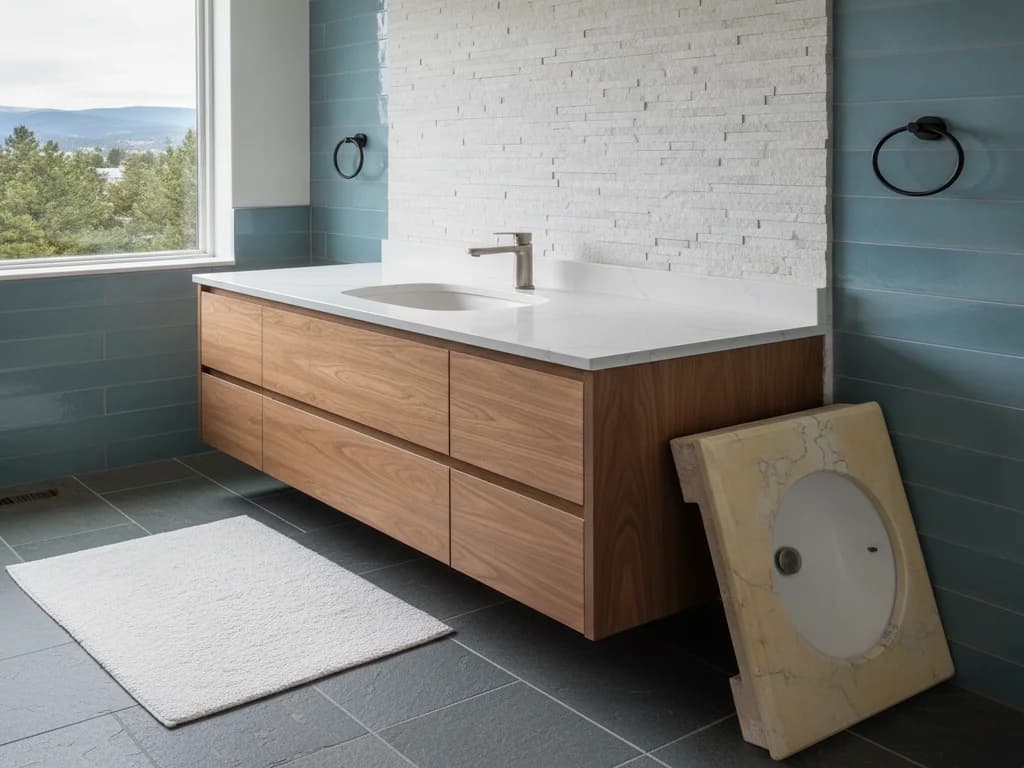
Stone basins — marble, travertine, onyx, granite, carved river stone — are genuinely beautiful objects, and they are the highest-maintenance choice on this page. Natural stone is porous and lives on its sealer: cosmetics, dyes, and even hard water can stain or etch an unsealed surface, and the Natural Stone Institute’s care guidance is a real ongoing regimen, not a one-time step. Buy stone as art you’re willing to maintain, not as a durability play.
Glass vessels concentrate a different honesty. The material itself is non-porous and hygienic — the problem is optics. Glass shows every mineral spot, and Treasure Valley water is hard; per USGS water-hardness classifications, much of the region’s supply carries the dissolved calcium and magnesium that print white spots on glass with every splash. A glass sink here means a squeegee-after-use habit or a permanently spotted basin.
Both materials also usually arrive in vessel format, which raises its own ergonomics and cleaning questions — the rim-height and splash realities in vessel vs. undermount apply doubly to these materials.
Hard water is a material filter, not a footnote
Before falling for any sink, picture it wearing a week of dried mineral spots — because with the Treasure Valley’s hard water, that’s the default state of any surface that shows them. Glazed china hides and releases mineral film easily; glass and dark polished stone display it. If nobody in the house will squeegee a sink, let the water pick the material.
The picks by category
The whole ranking, one table:
| Material | Best for | Durability | Upkeep | Honest caveat |
|---|---|---|---|---|
| Vitreous china | The default — every bathroom, every budget | Excellent glaze hardness; can chip on hard impact | Lowest — wipe and descale, nothing to seal | Chips are cosmetic repairs, not invisible ones |
| Fireclay | Oversized, farmhouse, and statement basins | Best-in-class chip resistance | Low — same glazed-surface care as china | Premium price; heavy; wants an experienced fabricator |
| Solid surface | Seamless integrated sink-and-counter tops | Softer surface; scratches sand out | Low — no rim seam at all | Dulls faster; keep hot tools off it |
| Cultured marble (integrated) | Budget seamless tops | Gel coat wears over years | Low while the gel coat lasts | Crazing and wear-through end its life, not breakage |
| Natural stone | Statement powder rooms | Hard but porous and etch-prone | Highest — sealing on a schedule | A maintenance commitment sold as a durability upgrade |
| Glass | Sculptural vessel looks | Tempered glass is tough but chippable at edges | High in hard-water areas | Shows every mineral spot Boise water can print |
Stone care per Natural Stone Institute guidance; regional water hardness per USGS classifications. Confirm care requirements on the manufacturer sheet for any specific basin.
Matching the material to your bathroom
The ranking, applied to real situations:
- Family bathroom that takes daily abuse: undermount vitreous china in a stone or quartz top — the boring, correct answer.
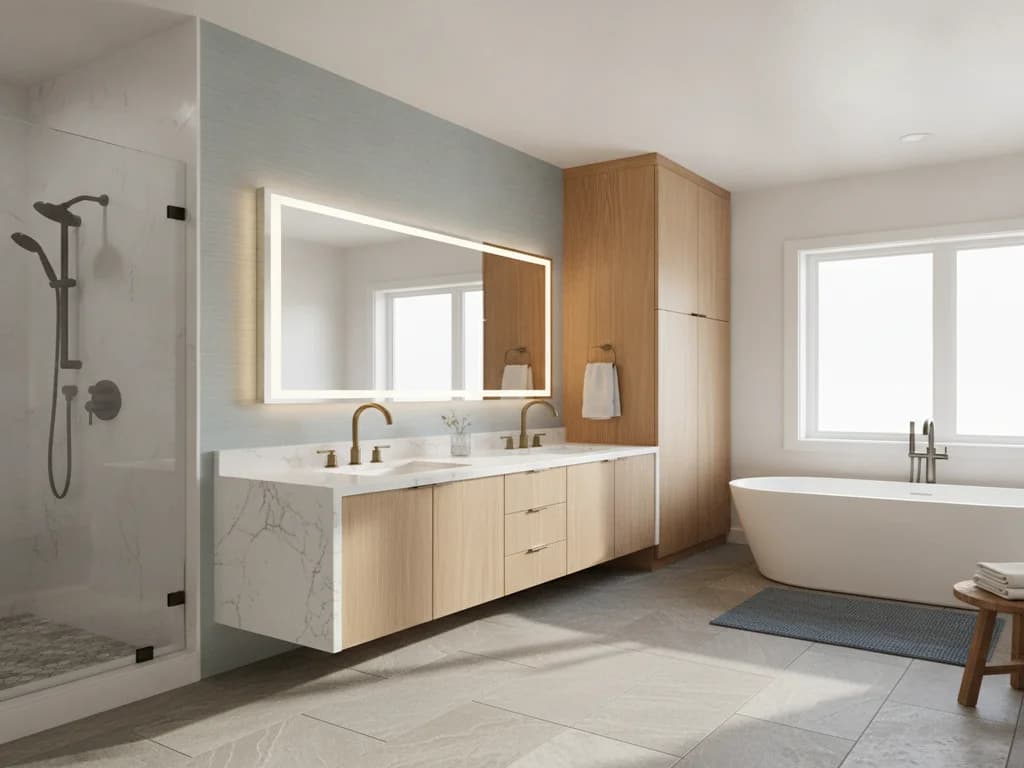
- Primary suite with a seamless modern brief: solid-surface integrated top, or fireclay if the design calls for a statement basin.
- Powder room where the sink is the jewelry: stone or glass vessel, chosen with the sealing or squeegee habit priced in — powder rooms’ light duty is exactly where these picks make sense.
- Rental or flip: drop-in or integrated china/cultured marble — cheap to buy, cheap to replace, tenant-proof.
- Household on well water or visibly hard city water: bias every pick toward glazed white surfaces that hide mineral film; skip glass and dark polished stone.
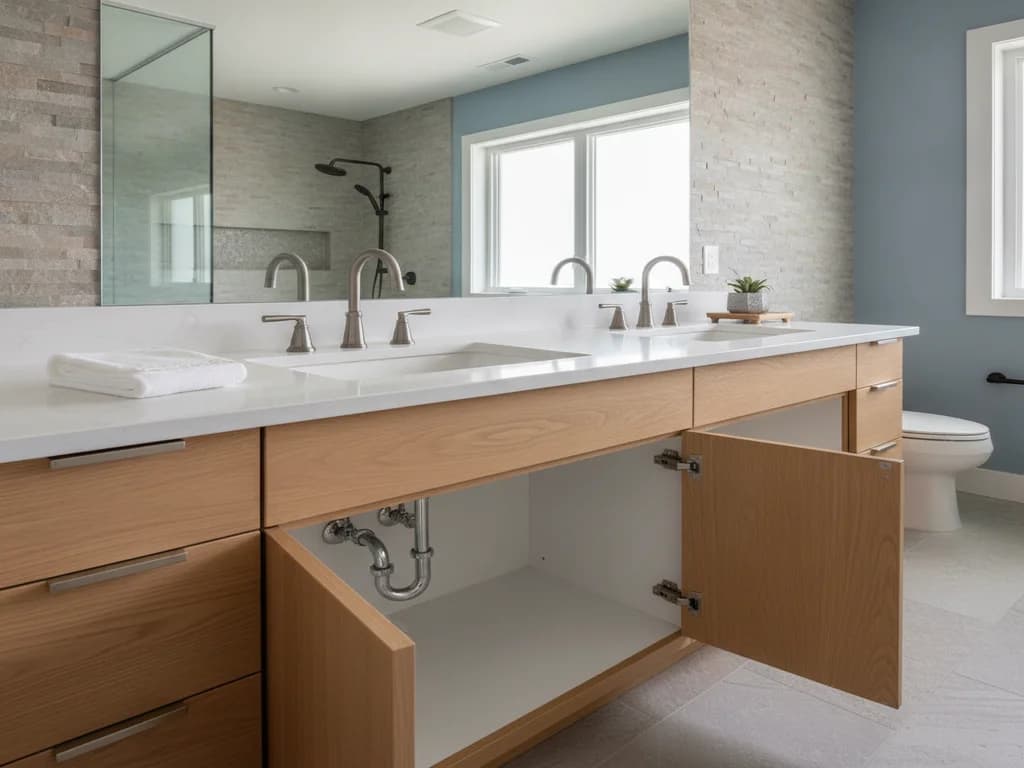
- Whatever the basin, it sits on a cabinet — the vanity material hierarchy is the other half of this decision.
Ready to plan your Boise bathroom?
Licensed & insured · 3-year workmanship warranty
Frequently asked questions
- What bathroom sink material lasts the longest?
- Fireclay and vitreous china, in that order — both carry fired glazes that outlast the fixtures around them, with fireclay adding extra chip resistance from its higher-temperature firing. In practice a china basin’s lifespan is usually ended by a remodel, not by the material failing. Solid surface lasts decades too, but its softer face collects wear along the way.
- Is vitreous china the same as porcelain or ceramic?
- They’re close cousins, and marketing blurs them. All are fired clay; vitreous china specifically carries a glaze fired until it vitrifies — becomes glass-like and non-porous. Fixture-grade “porcelain” sinks and vitreous china perform equivalently for bathroom use. The label that matters less is “ceramic” alone, which can span anything from fixture-grade to thin, chippable import basins.
- Do stone sinks stain?
- They can — natural stone is porous, and cosmetics, hair dye, and even mineral-heavy water can stain or etch it once the sealer wears thin. Sealing on a recurring schedule is the price of admission, per Natural Stone Institute care guidance. A stone basin in a light-use powder room is a manageable commitment; the same basin at a daily-use family sink is a part-time job.
- Are glass sinks hard to keep clean?
- The material wipes clean easily — the problem is what it shows. Every dried droplet leaves a mineral ring, and hard water like the Treasure Valley’s makes that a daily event rather than an occasional one. Owners who love their glass sinks tend to be squeegee people. If that habit sounds unrealistic, glazed china will look cleaner with a tenth of the effort.
- What sink material is best with an undermount installation?
- Vitreous china is the standard undermount pick — rigid, dimensionally consistent, and made in dozens of undermount shapes. Fireclay undermounts beautifully too but its firing tolerances want an experienced fabricator. Solid surface skips the question entirely by integrating sink and counter in one piece — the seam undermounting tries to minimize simply doesn’t exist.
Sources
- Kohler
- Natural Stone Institute
- USGS Water Science School — Hardness of Water
- Consumer Reports
- This Old House — Bathrooms
Claims and figures are drawn from the sources above and provided for general guidance; your project may vary. Photography is illustrative of design concepts. For a fixed price on your specific bathroom, request a free estimate.