Updated June 30, 2026 · 9 min read
By Boise Bath — bathroom & shower remodeling in Boise & the Treasure Valley
The short answer
Homeowners choose walk-in showers for easier, safer entry, simpler cleaning with fewer grout lines, a more open and modern look, and broad resale appeal. They suit aging-in-place plans, hard-water regions, and small bathrooms. Families bathing young children or with only one tub may keep a bathtub for flexibility.
Key takeaways
- Removing the step-over height of a tub improves safety and accessibility — a major reason older adults switch.
- Fewer seams and large tile surfaces make walk-in showers faster to clean, which matters in the hard-water Treasure Valley.
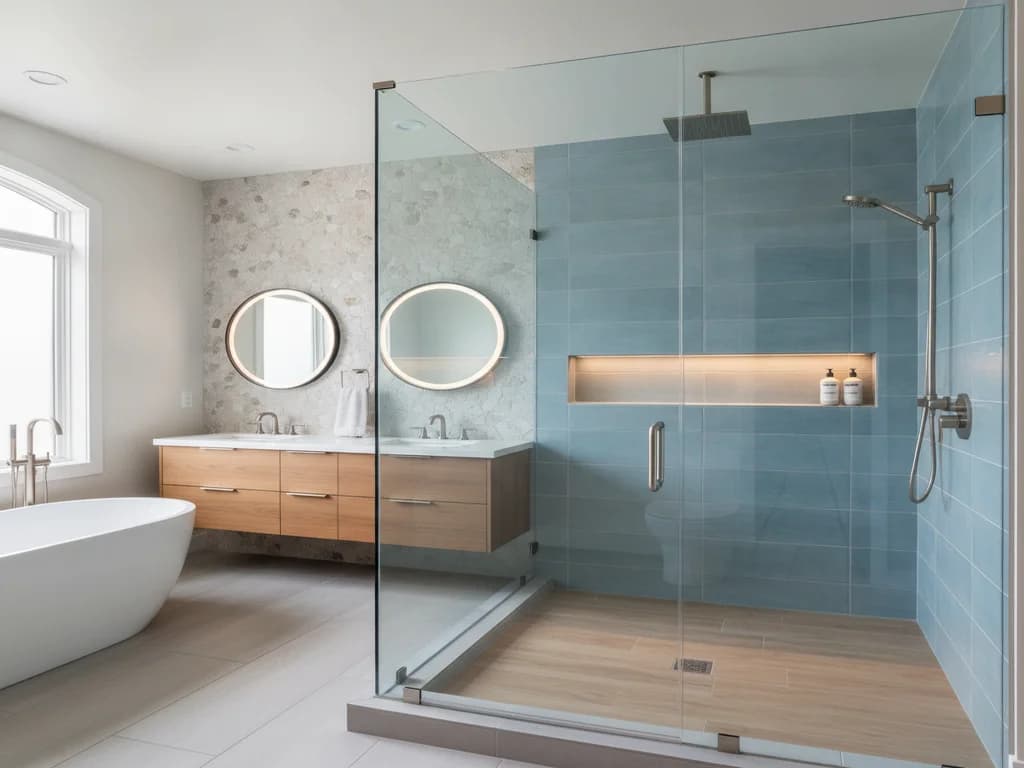
- An open, doorless or glass enclosure makes a bathroom look larger and more current.
- Walk-in showers broadly support resale appeal, especially for aging buyers (see the cost guide for ROI figures).
- A bathtub can still be the smarter choice in a single-bathroom home or with young children.
Why are so many Boise homeowners switching to walk-in showers?
Walk past almost any recent Treasure Valley remodel and you will see the same move: the little-used corner tub comes out, and an open walk-in shower goes in. The reasons are practical, not just stylish — a walk-in shower is easier to step into, easier to clean, and it makes a tight bathroom feel bigger. For many households it simply fits the way they actually live.
There are two strong local currents behind the trend. First, an aging population that wants to stay in their homes — which makes a low, step-free entry genuinely valuable. Second, the gap between newer Meridian, Eagle, and Star builds (where a roomy primary shower is expected) and older Boise, North End, and Bench homes (where a cramped tub alcove is the only bathing option). A conversion to a walk-in shower closes that gap.
Below are 20 concrete benefits, grouped by theme so you can find the ones that matter to you. We will keep this list to the "why," and link out for the head-to-head decision and the dollar figures — because both deserve their own deeper guides. And because no honest list is all upside, there is a frank "is this right for you?" section near the end, including the cases where keeping a tub is the better call.
| Benefit | Why it matters | Who it helps most |
|---|---|---|
| Low or no curb | Removes the high step-over of a tub | Older adults, anyone with mobility limits |
| Easy to clean | Fewer grout lines and crevices | Busy households, hard-water areas |
| Feels more open | Glass and doorless layouts free up sightlines | Small and single-bath homes |
| Modern, on-trend look | Current styling buyers respond to | Sellers and updaters |
| Room for a bench/grab bars | Built-in support and seating | Aging-in-place plans |
| Efficient fixtures | WaterSense heads cut water use | Cost- and eco-minded owners |
How do walk-in showers improve safety and accessibility?
This is the benefit that drives the most switches, and for good reason. The single most dangerous moment in a bathroom is stepping over a tub wall — wet feet, a high lip, often nothing to hold onto. A walk-in shower removes that obstacle.
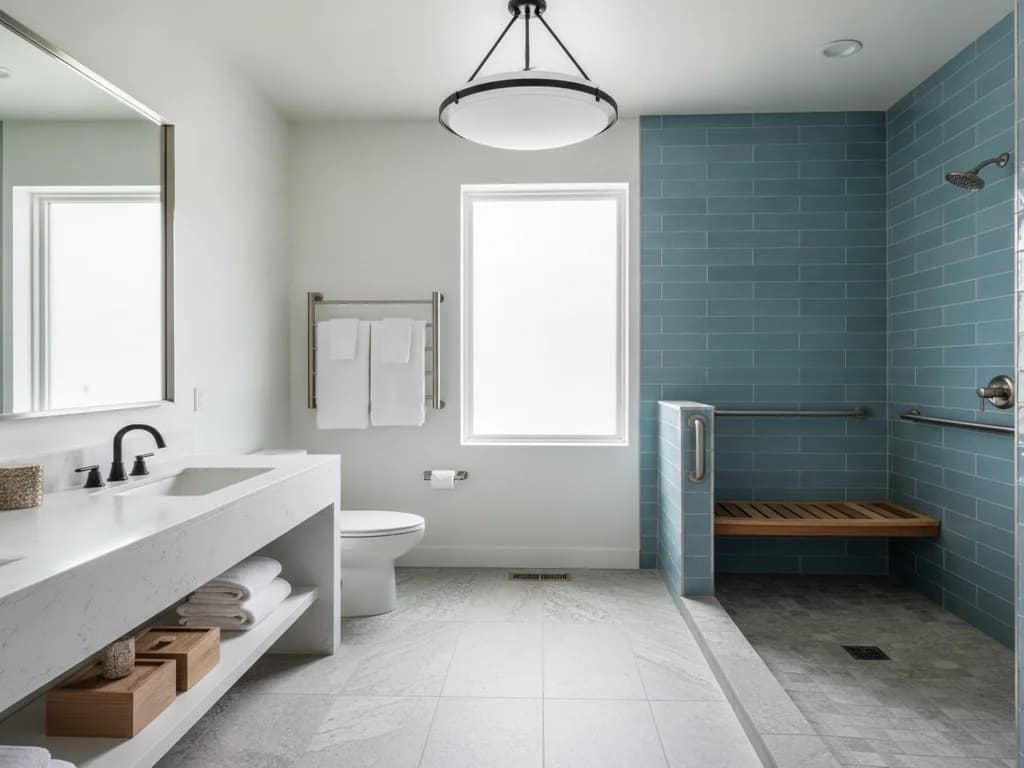
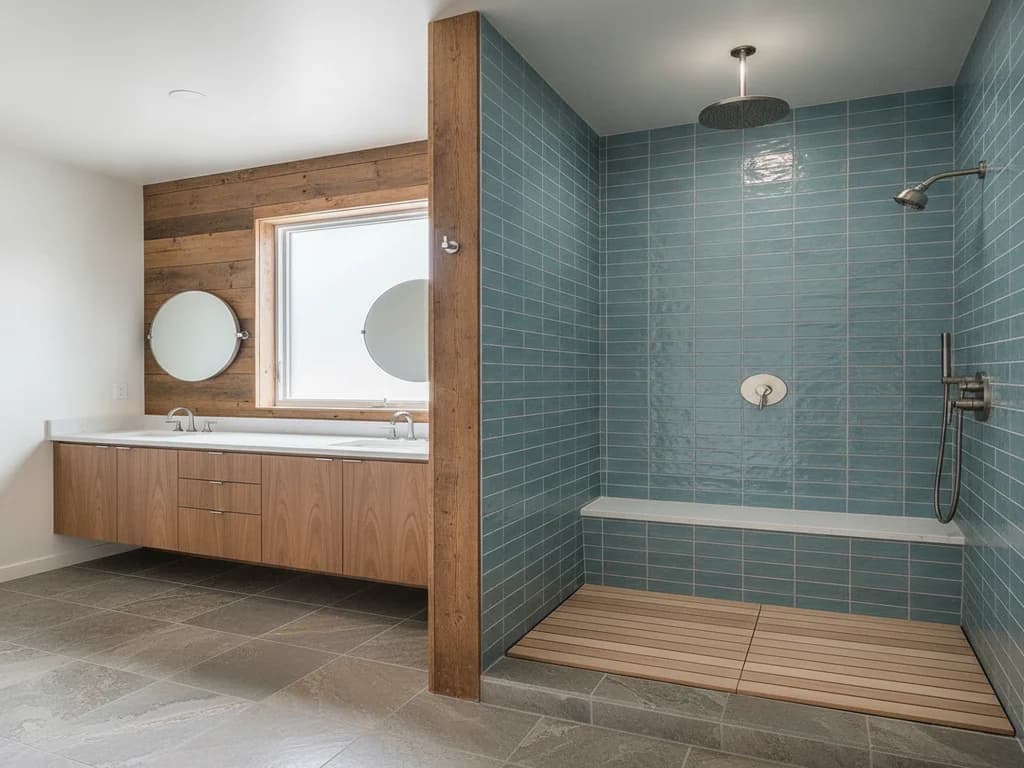
1. A low or zero curb eliminates the tall step-over of a tub, the most common bathing trip hazard. 2. Room for a built-in bench lets you sit to shower or to shave — useful for anyone with limited balance or stamina. 3. Blocking for grab bars can be built into the walls during the remodel so support bars are solid, not decorative. 4. A non-slip floor — small-format tile or a textured large-format tile — gives grip underfoot. 5. A curbless, roll-in layout can even accommodate a wheelchair or shower chair where the floor space allows.
According to the CDC, falls are the leading cause of injury among older adults, and a large share happen at home — which is why a step-free, well-supported shower is one of the most meaningful aging-in-place upgrades you can make. The ADA publishes detailed specifications for accessible roll-in showers and grab-bar placement; we use those guidelines as a design reference for height and clearance, though a home bathroom is not a regulated public facility and we never present a remodel as a certified ADA-compliance guarantee.
If accessibility is your main driver, go deeper with our aging-in-place bathroom ideas and our bathroom safety tips, which cover lighting, grab bars, and slip-resistant surfaces in detail.
Are walk-in showers easier to clean and maintain?
Anyone who has scrubbed the rolled lip and sliding-door track of an old tub-shower knows where the grime hides. A walk-in shower designs most of that out.
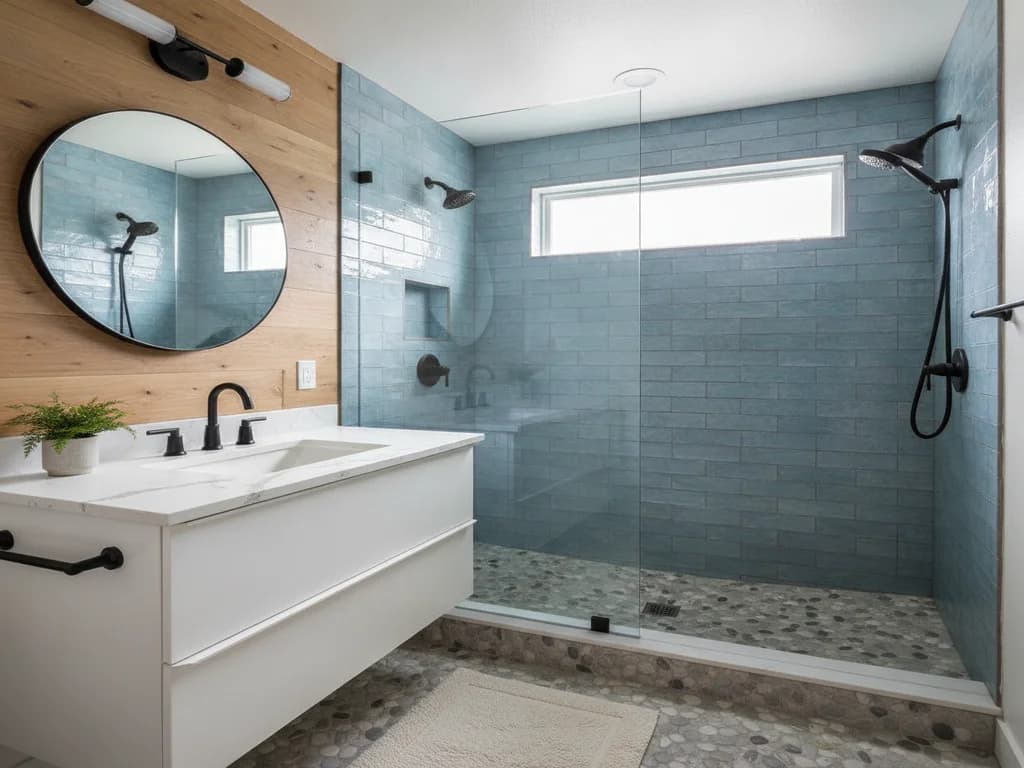
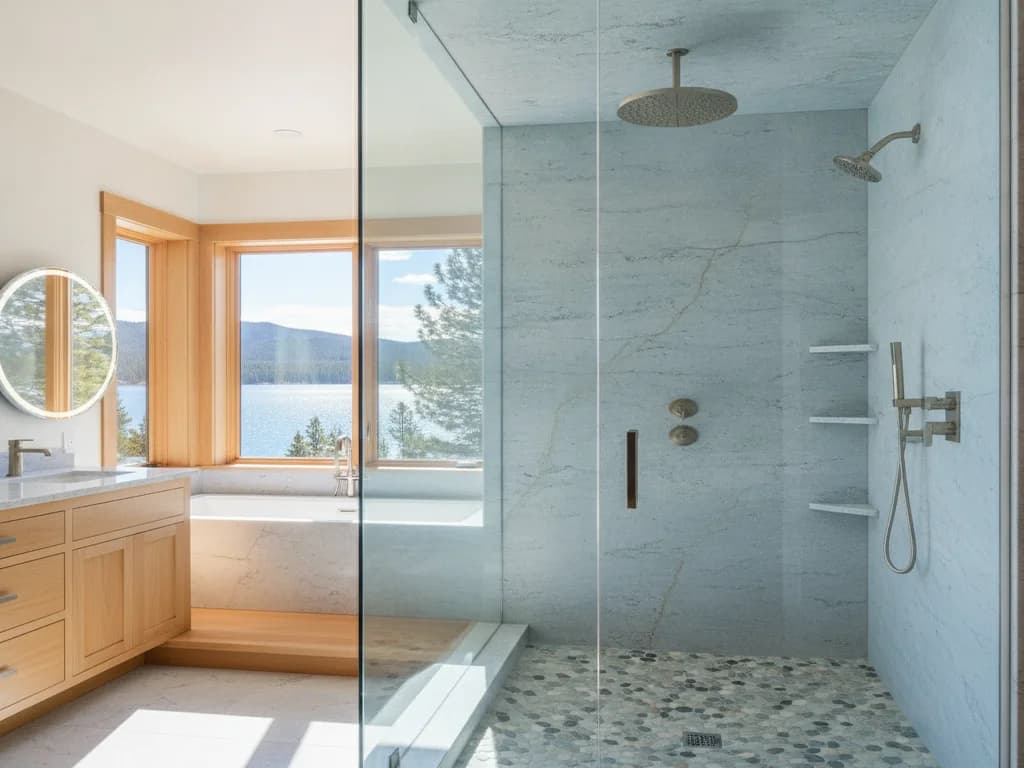
6. Fewer grout lines — especially with large-format tile — means fewer seams to scrub and re-seal. 7. No door track on a doorless or single-panel layout removes the channel where soap scum and mildew collect. 8. Frameless glass has far less metal frame to wipe than a framed enclosure. 9. A hydrophobic glass coating sheds water and resists the mineral spotting that hard water leaves behind. 10. A linear or low-profile drain is easy to lift and keep clear.
These are not abstract perks in the Treasure Valley. Boise tap water is moderately hard, so mineral spotting on glass and buildup on fixtures is a real, recurring chore. Choosing large-format tile, a glass coating, and matte black or brushed finishes (which hide spots better than polished chrome) turns a high-maintenance surface into a low-maintenance one.
A hard-water tip that pays off daily
Pair a hydrophobic glass coating with a quick squeegee after each shower. The coating does the heavy lifting against mineral spotting; the 20-second squeegee keeps the glass clear for years. It is the cheapest upgrade with the biggest day-to-day payoff in our water.
Do walk-in showers make a bathroom feel bigger?
Square footage does not change, but the perception of space does — and that is what you actually experience.
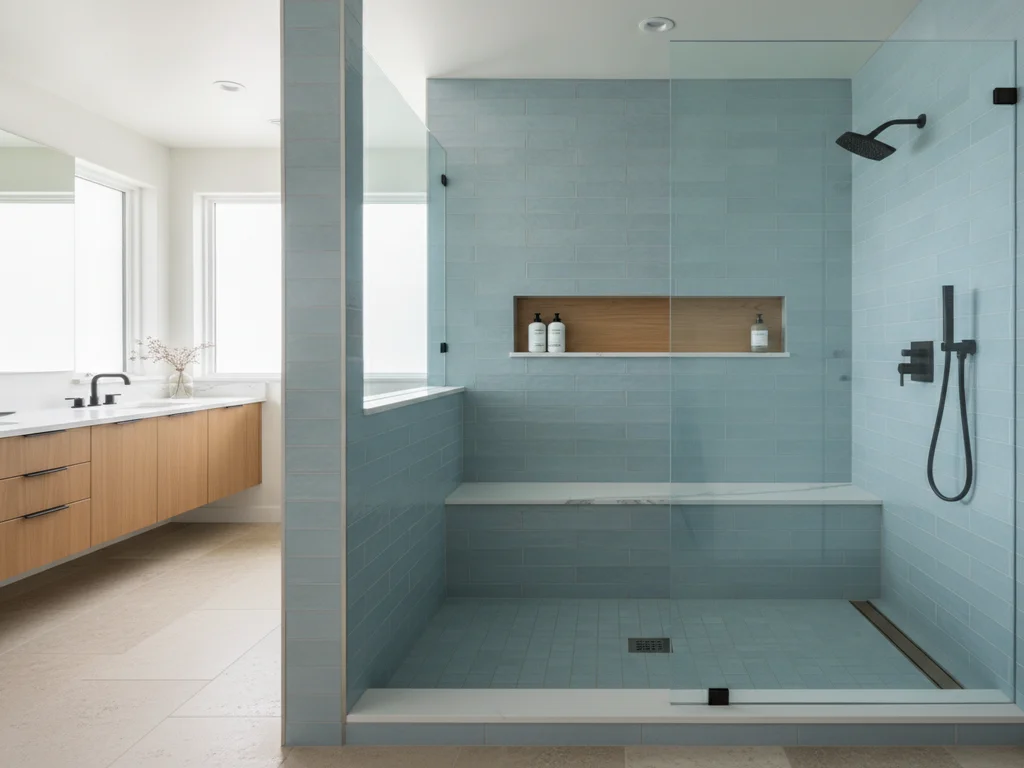
11. Clear glass instead of a curtain or framed door lets the eye travel all the way to the back wall, so the room reads as one continuous space. 12. A doorless walk-in layout removes the visual barrier entirely. 13. A curbless floor that runs the same tile from the bathroom into the shower blurs the boundary, which is the strongest "feels bigger" trick of all.
This openness is exactly why walk-in showers are so popular in compact bathrooms. Removing a bulky tub and a shower curtain can make a small room feel noticeably more generous. For more space-saving moves, see our small-bathroom remodel ideas.
Are walk-in showers more stylish and modern?
A walk-in shower is one of the few upgrades that reads as current to almost everyone.
14. An open, frameless or doorless enclosure is the defining look of a modern bathroom — clean lines, slim hardware, lots of glass. 15. A tile feature wall, recessed niche, or rainfall head gives the room a focal point that a standard tub-shower simply cannot. The result feels intentional and upscale even on a sensible budget.
Style is a deep topic on its own, so we keep the inspiration in one place: browse our walk-in shower design ideas for enclosures, tile, niches, benches, and lighting, or see finished Boise bathrooms in the gallery for a sense of how the pieces come together.
Do walk-in showers add resale value?
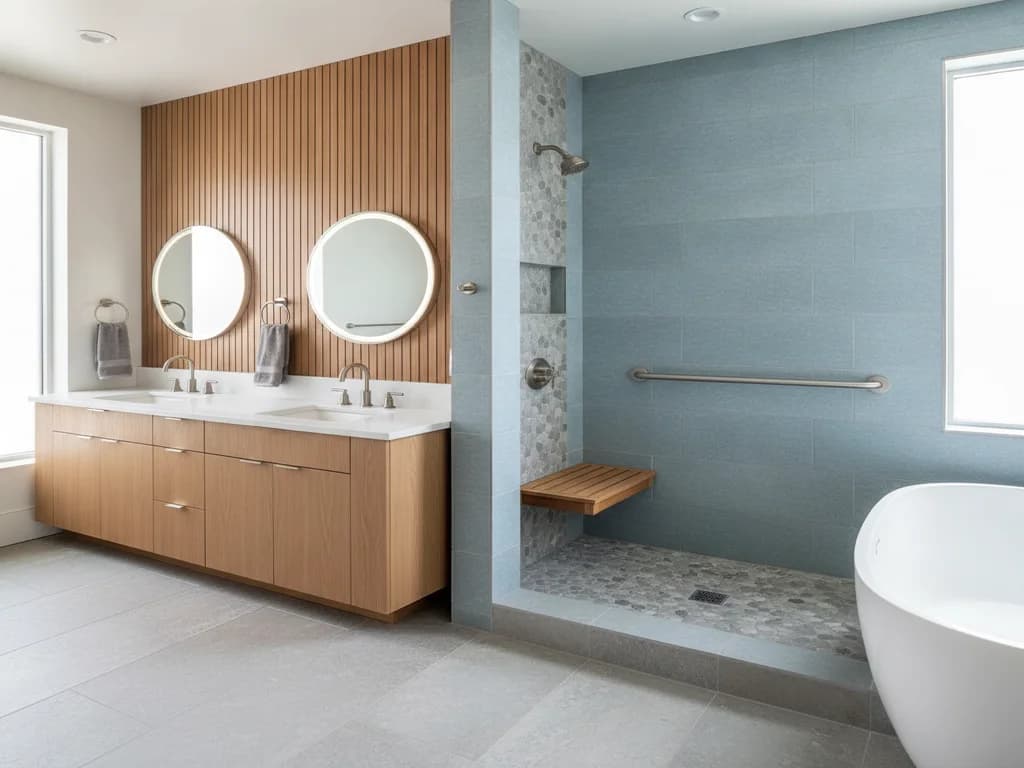
In broad strokes, buyers respond well to a clean, open, well-built walk-in shower — particularly one with a curbless or low-threshold entry that signals the home is ready for the long haul. As the Treasure Valley population ages, step-free bathing becomes a feature a growing share of buyers actively look for.
16. Broad buyer appeal comes from a modern, move-in-ready bathroom. 17. Aging-in-place readiness widens your future buyer pool to include older buyers and their families. We are careful not to promise specific return numbers here — that math belongs in a dedicated guide. See bathroom upgrades that add the most value for the priorities, and how much a Boise bathroom remodel costs for cost and ROI figures.
Are walk-in showers better for daily comfort and wellness?
Beyond the practical wins, a walk-in shower is simply a nicer place to start and end the day.
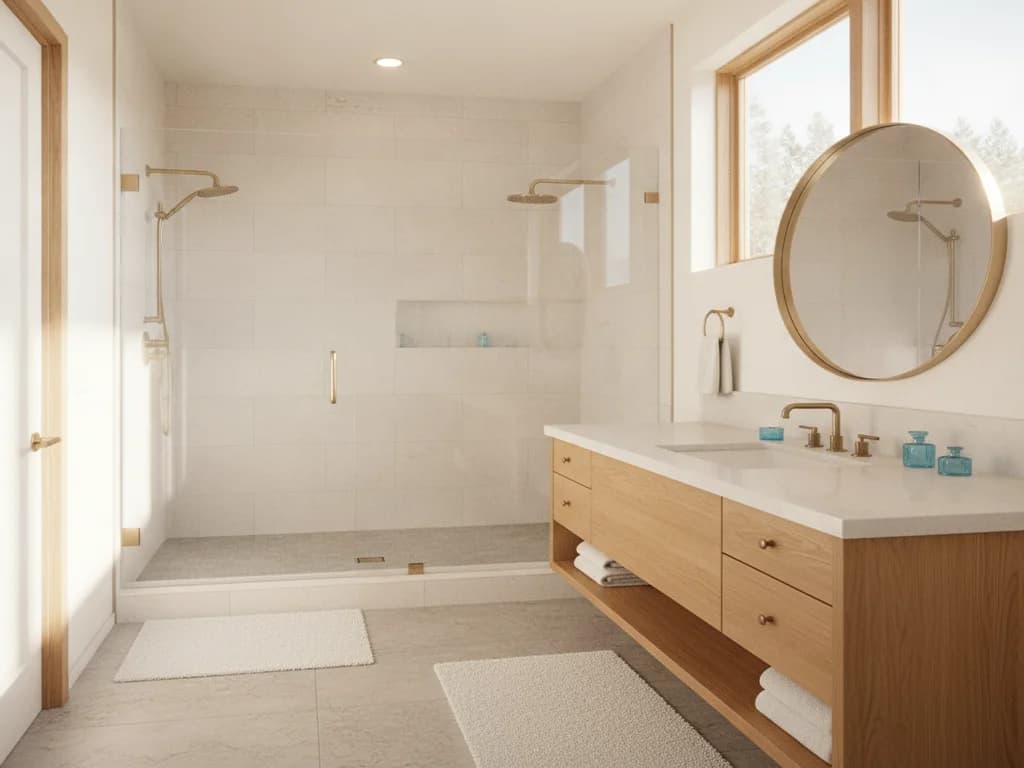
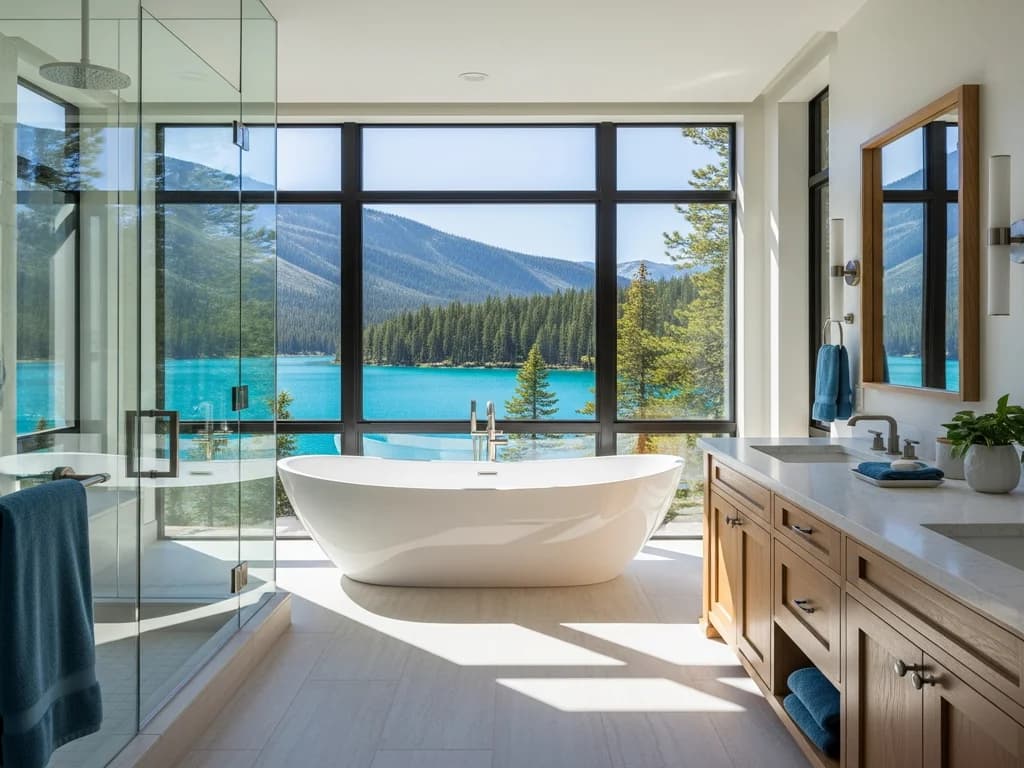
18. Spa fixtures — a rainfall head, a handheld, a thermostatic valve, even body sprays — turn a routine into a small luxury, and they are far easier to fit in an open shower than in a tub surround. 19. A built-in bench and easy step-in entry make the space genuinely comfortable to use, whether you want to sit and relax or just need a stable place to stand. For households that rarely take baths, all of that comfort is delivered in the space the tub used to waste.
Can a walk-in shower save water or energy?
A shower already tends to use less water than filling a tub, and a thoughtful walk-in shower can do better still.
20. WaterSense-labeled showerheads meet the EPA WaterSense efficiency criteria — they use less water (and therefore less of the energy needed to heat it) without the weak, dribbling pressure that gave low-flow heads a bad name years ago. Pair an efficient head with a quality mixing valve and you get a comfortable shower that is easier on both your water bill and the aquifer.
How do walk-in showers fit older Boise homes?
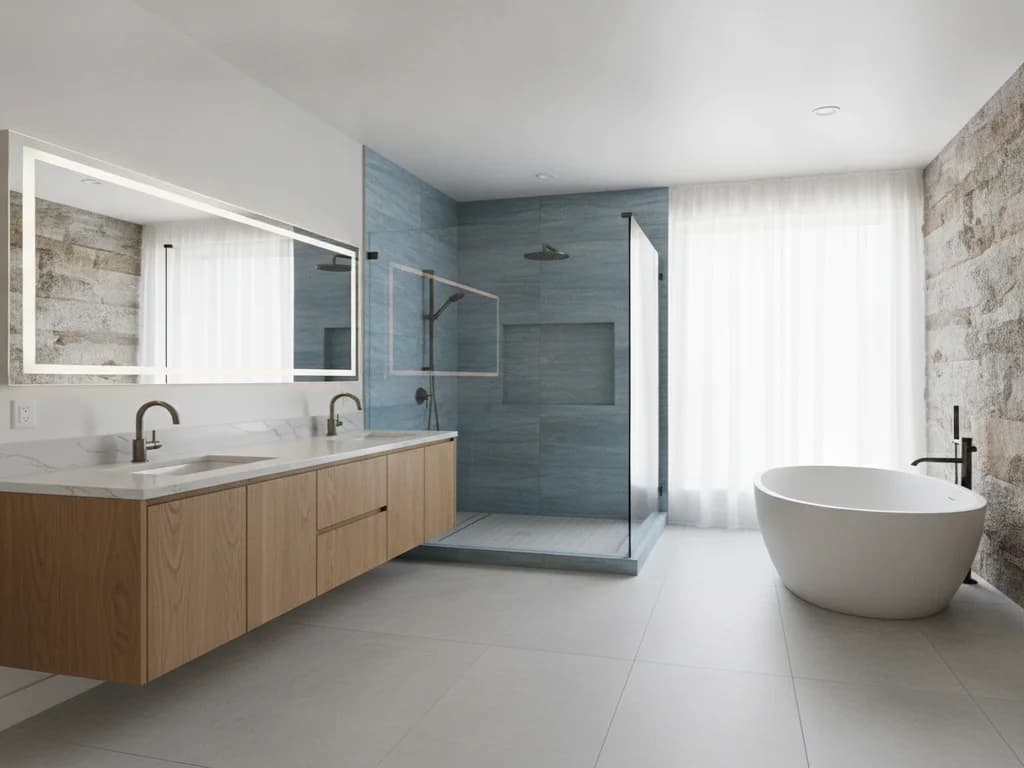
Boise’s older North End and Bench homes have real character, but their bathrooms are often a single tight room built around a standard tub alcove. That alcove is frequently the bottleneck — it is the only bathing option, it eats the floor space, and it is hard to step into.
Converting that alcove to a walk-in shower is one of the highest-impact changes you can make in these homes: it modernizes the room, opens up the floor, and removes the step-over hazard, all while you keep the home’s charm everywhere else. Newer Meridian, Eagle, and Star builds usually have the room already — there the switch is about bringing a builder-grade shower up to the level of the rest of the house. Either way, the work hinges on careful waterproofing behind the tile, so it is worth doing right the first time.
Is a walk-in shower right for you?
For most households the answer is yes — but a good remodeler should tell you when it is not. A walk-in shower is an especially strong fit if anyone in the home has trouble stepping over a tub wall, if you are planning to age in place, if your bathroom feels cramped, if you rarely take baths, or if cleaning the old tub-shower is a constant chore. If two or three of those describe you, the decision is usually easy.
It is a less obvious fit in a few honest cases, covered next. And if you are torn between a full custom walk-in shower and a simpler swap, weigh a walk-in shower against a tub-to-shower conversion — that guide runs the head-to-head we deliberately skip here.
Not sure which way to lean?
The fastest way to know is to have someone look at your actual bathroom. We will tell you honestly whether a walk-in shower, a tub-to-shower conversion, or keeping the tub makes the most sense for your home and budget. Request a free estimate and we will walk it with you.
When should you keep a bathtub instead?
There are real reasons to keep a tub, and pretending otherwise would not serve you.
Young children at home. Bathing babies and toddlers is far easier in a tub, and many parents simply prefer it for the early years. A single-bathroom home. Removing the only tub in the house can hurt resale, because a slice of buyers — especially families — still want at least one bathtub. In a one-bath home, that trade-off deserves real thought. You actually love baths. If a long soak is part of your routine, a tub (or a separate freestanding tub if space allows) keeps that ritual. A very tight or oddly shaped space can occasionally make a comfortable walk-in shower impractical without a larger renovation.
A common middle path: if you have more than one bathroom, convert the primary or most-used bath to a walk-in shower and keep a tub in a secondary bath. That way you get the daily benefits without losing the flexibility a tub provides. For ideas on reclaiming a little-used tub specifically, see our tub-to-shower conversion ideas.
Ready to plan your Boise bathroom?
Licensed & insured · 3-year workmanship warranty
Frequently asked questions
- Are walk-in showers worth it?
- For most homeowners, yes — they are safer to step into, easier to clean, feel more open, and broadly appeal to buyers. They are especially worth it if you are aging in place, have a cramped bathroom, or rarely take baths. A bathtub may still be worth keeping if you have young children or only one bathroom.
- What are the disadvantages of a walk-in shower?
- Honestly, there are a few. You lose the option of a soak unless you keep a tub elsewhere, an open or doorless design needs good ventilation and correct sloping to control splash, and removing the only tub in a one-bathroom home can narrow your buyer pool at resale. For many households these trade-offs are minor, but they are worth weighing.
- Do walk-in showers add value to your home?
- A clean, open, well-built walk-in shower is broadly appealing to buyers, especially with a low or curbless entry that signals aging-in-place readiness. We do not promise a specific return here — for ROI figures, see our Boise bathroom remodel cost guide.
- Are walk-in showers safer than bathtubs?
- Generally, yes, because they remove the high step-over of a tub wall — the most common bathing trip hazard. The CDC notes that falls are the leading cause of injury among older adults, many of them at home, which is why a step-free, well-supported shower is a popular safety upgrade. Adding a bench, grab bars, and a non-slip floor improves safety further.
- Is it a mistake to remove the only tub in the house?
- It can be. In a single-bathroom home, removing the only tub may hurt resale because some buyers — especially families with young children — want at least one bathtub. If you have more than one bathroom, a common solution is to convert the primary bath to a walk-in shower and keep a tub in a secondary bath.
- Are walk-in showers easier to clean than tub-showers?
- Usually, yes. Large-format tile means fewer grout lines, a doorless or frameless design removes the door track where grime collects, and a hydrophobic glass coating resists mineral spotting from hard water. Those choices make a real difference in the Treasure Valley, where the water is moderately hard.
Sources
- CDC — Older Adult Falls
- ADA.gov — Americans with Disabilities Act accessibility guidance
- EPA WaterSense — Showerheads
Claims and figures are drawn from the sources above and provided for general guidance; your project may vary. Photography is illustrative of design concepts. For a fixed price on your specific bathroom, request a free estimate.