Updated July 16, 2026 · 7 min read
By Boise Bath — bathroom & shower remodeling in Boise & the Treasure Valley
The short answer
The bathroom flooring mistakes that matter happen before the finish floor goes down: skipping the subfloor inspection, omitting a waterproofing membrane where one is needed, choosing moisture-vulnerable materials like laminate or solid hardwood for a wet room, and ignoring floor-height transitions. Each one is invisible on day one and expensive by year three — and each is cheap to prevent during installation.
Key takeaways
- A bathroom floor is a system — subfloor, underlayment, waterproofing, finish — and it fails at its weakest layer, not its prettiest one.
- Installing over a soft, water-stained, or springy subfloor guarantees the new floor inherits the old floor's problems; inspection costs minutes, skipping it costs the whole install.
- Laminate, solid hardwood, and carpet have no honest place in a full bathroom — standing water and daily humidity attack all three.
- "Waterproof" flooring does not waterproof the room: seams, perimeters, and fixture cutouts still pass water to the subfloor below.
- Floor-height mismatches at the doorway and toilet flange are the most common sign of a stacked, shortcut install.
- Pulling the toilet to run flooring underneath it — never cutting around the base — is a five-minute test of installer quality.
Why bathroom floors fail from below
Walk into any flooring showroom and the conversation is about the top layer: wood-look or stone-look, matte or polished, plank width and grout color. But almost no bathroom floor fails because the homeowner picked the wrong color. Floors fail at the layers you cannot see — a subfloor that was already compromised, a missing membrane, a seam that let water travel — and by the time the failure surfaces, the finish floor is collateral damage.
That inversion is the theme of every mistake on this list. The decisions that determine a bathroom floor's lifespan are made in the two days before the finish material shows up, which is exactly when corner-cutting is easiest to hide.
One scope note: this article covers mistakes that apply across flooring materials. Tile has its own set of installation-specific failures — wrong trowel size, poor coverage, missing movement joints — and those live in our bathroom tile mistakes guide.
Mistake 1: Skipping the subfloor inspection
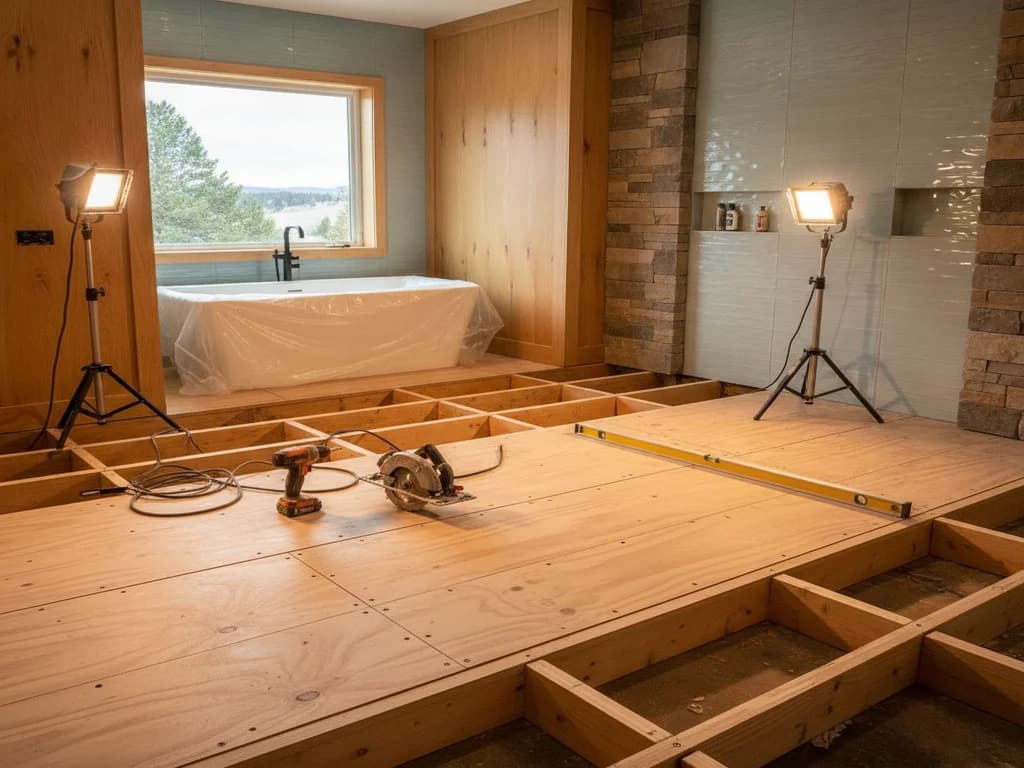
Every bathroom flooring project starts with a question most people never ask: what condition is the wood under the old floor in? Bathrooms are the most likely room in the house to have hidden subfloor damage — decades of toilet-seal seepage, tub-edge splash, and supply-line drips accumulate in the OSB or plywood below. Cover damaged subfloor with new flooring and you have built on a foundation that is already failing.
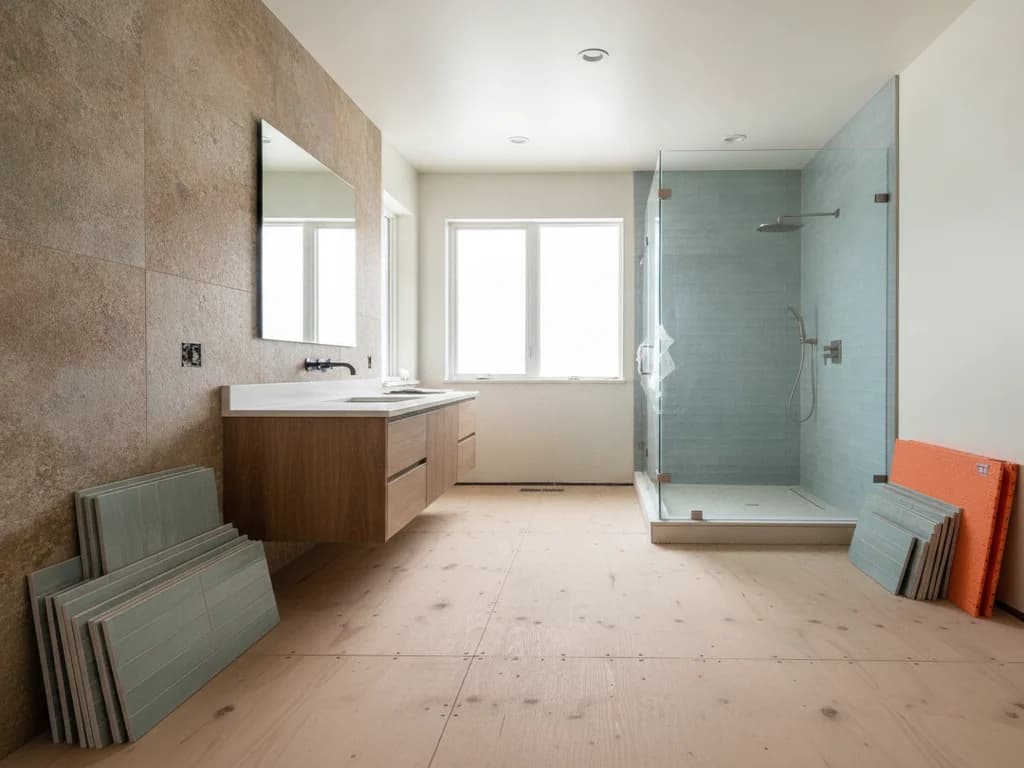
The signs are readable before demolition: floors that feel spongy near the toilet or tub, a toilet that rocks, dark staining visible from a basement or crawlspace below, or a persistent musty smell. During demolition, a professional probes the exposed subfloor for softness and checks moisture content before anything new goes down.
When damage turns up, it must be cut out and replaced — not dried out and hoped over, and never "stiffened" with an extra layer of underlayment on top. What that repair involves and what it runs is covered in our bathroom subfloor replacement cost guide.
The rocking toilet rule
A toilet that rocks even slightly is the single most reliable early warning of subfloor damage in a bathroom. The movement usually means the flange area has softened from slow wax-ring seepage — and every rock pumps a little more water into the wood. Never shim it and move on; find out why it rocks before installing a new floor around it.
Mistake 2: Treating "waterproof flooring" as a waterproofed floor
Modern flooring marketing has convinced a generation of homeowners that buying a waterproof product waterproofs the room. It does not. A waterproof plank or tile is a component; the floor is a system of seams, perimeter gaps, fixture penetrations, and transitions — and water finds whichever joint was not defended. We cover how this plays out for vinyl plank specifically in problems with LVP in bathrooms, and the honest tradeoffs in LVP's pros and cons.
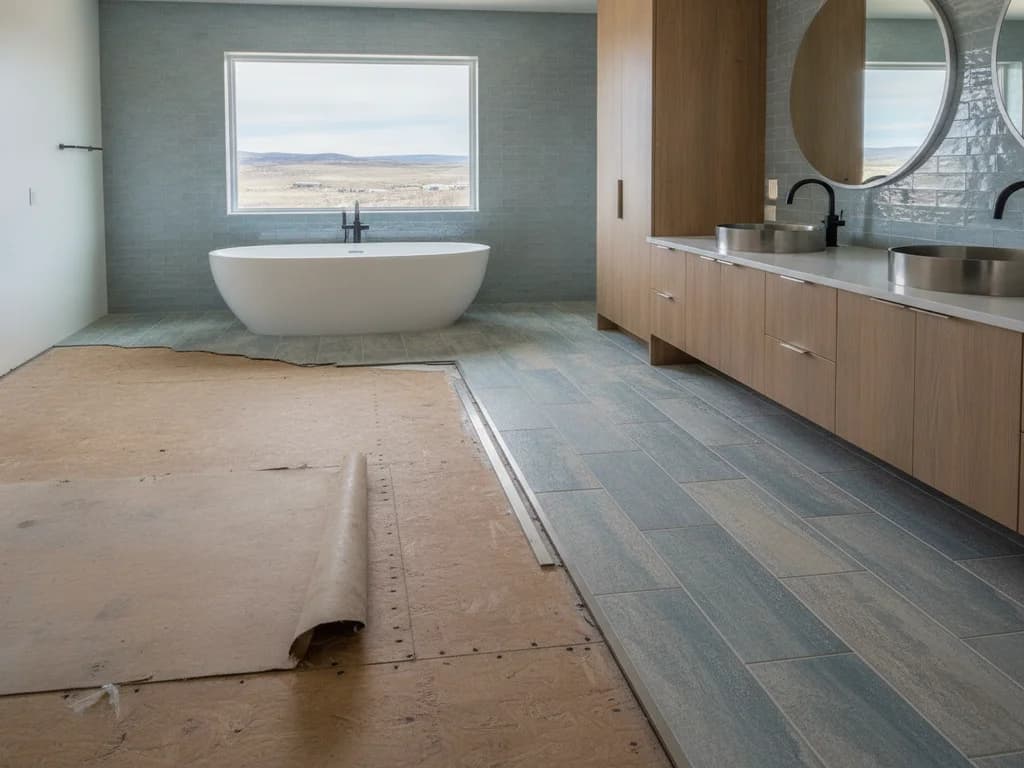
For tile floors, the protection layer is a dedicated waterproofing or uncoupling membrane — sheet systems like Schluter DITRA or liquid-applied membranes — installed between subfloor and tile in wet areas. Tile and grout alone are not waterproof; the Tile Council of North America's installation methods treat membranes as a distinct, specified layer, not an optional upgrade. For floating floors, the defense is sealed perimeters and maintained caulk at the tub, toilet, and vanity.
The mistake is assuming the product name did the job. The question to ask any installer is not "is this floor waterproof?" but "what happens to water that gets past it?" A good answer names a membrane, a sealed seam, or a drainage path. A bad answer repeats the product brochure.
Mistake 3: Choosing a material that cannot live in a wet room
Some materials simply do not belong in a full bathroom, no matter how good they look in the adjacent hallway:
- Laminate: the fiberboard core swells permanently on contact with standing water, and seams are entry points. Even "water-resistant" laminate carries hour-limited spill warranties that daily bathroom life exceeds. The comparison is in tile vs. laminate flooring.
- Solid hardwood: seasonal humidity swings alone cup and gap it; a full bathroom accelerates the cycle. The details are in tile vs. hardwood in bathrooms.
- Carpet: holds moisture against the subfloor, feeds mold, and is unsanitary around a toilet — the EPA notes carpet in humid or wet areas is a documented mold risk. Removal is covered in replacing carpet in a bathroom.
- Cheap peel-and-stick tile: adhesive fails in humidity, corners lift, and water travels beneath — fine in a laundry closet, a liability around a tub.
Mistake 4: Ignoring floor height and transitions
Flooring materials stack to very different heights: sheet vinyl sits a few millimeters tall, while tile over a proper underlayment and membrane can add three-quarters of an inch or more. Ignore the math and the results announce themselves every day — a trip-edge threshold at the doorway, a toilet flange buried below the new floor level, doors that no longer clear the floor, and baseboards floating above it.
The flange problem is the expensive one. When a new floor rises above the toilet flange, the wax seal has to bridge a gap it was never designed for, and slow seepage follows. The correct fix is a flange extender or flange reset to the new floor height — a standard step in any professional install, and a detail shortcut installs skip constantly.
Doorway transitions deserve equal attention: a properly chosen transition strip handles the height change and lets floating floors expand, and the options are covered in our guide to bathroom thresholds and transitions. The worst version of this mistake is floating a new floor directly over one or two old floor layers to skip demolition — every stacked layer raises the height, hides old damage, and voids most manufacturer specs.
Mistake 5: Cutting flooring around fixtures instead of under them
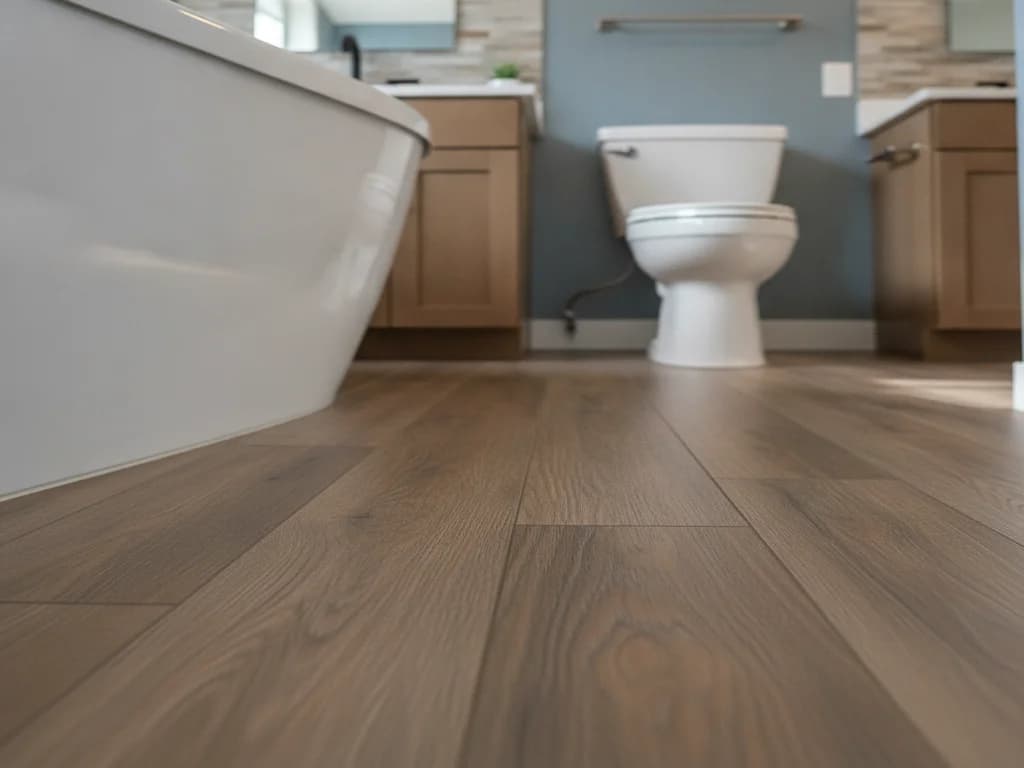
You can grade a bathroom flooring install in five seconds: look at the toilet. If the flooring was cut around the toilet base and caulked to it, the installer chose speed over correctness. The floor should run underneath — the toilet pulled before installation, the flooring laid, and the toilet reset on a new wax ring at the finished height.
The caulked-around version leaves an exposed flooring edge at the wettest fixture in the room, guarantees a visible outline if the next toilet has a different base shape, and — for floating floors — pins the floor so it cannot expand, which telegraphs as buckling somewhere else in the room. The same logic applies to vanities in most cases: flooring first, fixtures on top, with the details in our replacing bathroom flooring walkthrough.
Mistake 6: Buying the floor without pricing the whole job
The material price on the showroom tag is often a third or less of the real project. Professional bathroom flooring replacement typically runs roughly $800–$2,900 all-in for an average bathroom depending on material and prep, per Angi — and the spread between a clean job and a problem job is almost entirely in the layers this article covers: demolition of the old floor, subfloor repair, membrane, flange work, and transitions.
That is why the cheapest bid on identical material should raise questions rather than excitement. A bid that is hundreds lower usually found its savings in the invisible layers — floating over the old floor, skipping the membrane, caulking around the toilet. The full cost breakdown lives in our bathroom flooring replacement cost guide, and whether the floor is worth replacing at all is the subject of should I replace my bathroom flooring.
In a small room, the honest economics often point to bundling: if the floor is coming up anyway, a full remodel captures the demolition and trades you are already paying for once.
Ready to plan your Boise bathroom?
Licensed & insured · 3-year workmanship warranty
Frequently asked questions
- What is the most common bathroom flooring mistake?
- Installing new flooring over a compromised subfloor. Bathrooms accumulate hidden moisture damage around toilets and tubs, and covering soft or stained subfloor with new material guarantees an early failure. A pre-install inspection — probing for softness, checking from below, investigating any rocking toilet — is the cheapest insurance in the entire project.
- Do bathroom floors really need a waterproofing membrane?
- Tile floors in wet areas should have one — tile and grout are not waterproof on their own, and TCNA installation methods specify membranes as a distinct layer. Floating floors like LVP rely instead on sealed perimeters and maintained caulk lines. Either way, the floor system needs a designed answer for water that gets past the surface, because some always does.
- What flooring should you never put in a bathroom?
- Carpet, laminate, and solid hardwood are the clear exclusions for full bathrooms. Carpet traps moisture against the subfloor and feeds mold; laminate's fiberboard core swells permanently when water reaches a seam; solid hardwood cups and gaps under daily humidity swings. All three can work in a powder room with no tub or shower, but not in a wet room.
- Should flooring go under the toilet or around it?
- Under it. The professional sequence is pull the toilet, run the flooring beneath, then reset the toilet on a new wax ring — with a flange extender if the new floor height requires one. Cutting flooring around the base and caulking to it leaves a vulnerable edge at the room's wettest fixture and pins floating floors so they cannot expand.
- Can you install new bathroom flooring over the old floor?
- Sometimes one sound, flat, well-bonded layer can be floated over — but in bathrooms it is usually a mistake. Stacking raises the floor above the toilet flange and door thresholds, hides whatever the old floor was concealing, and often violates the new product's installation spec. Demolition down to the subfloor is the default for a reason.
- How much does it cost to fix a bathroom floor done wrong?
- More than doing it right the first time — a failed install means paying for demolition twice, plus whatever subfloor damage developed while the problem was hidden. Full replacement typically runs roughly $800–$2,900 for an average bathroom per Angi, with subfloor repair added on top when moisture has done structural damage.
Sources
- Tile Council of North America (TCNA)
- Schluter Systems
- EPA — Mold
- Angi — Cost Guides
- This Old House — Bathrooms
Claims and figures are drawn from the sources above and provided for general guidance; your project may vary. Photography is illustrative of design concepts. For a fixed price on your specific bathroom, request a free estimate.